Guide · 3 min read
The cutting stock problem in workshops
The cutting stock problem is the math puzzle behind every cut list: how to divide fixed stock into required parts with minimal waste. In shops it shows up twice: once for long goods (1D) and once for panels (2D nesting). Academic solutions can be NP-hard, but practical shops need fast, good-enough plans with kerf, grain, and real stock sizes baked in.
1D vs 2D in practice
1D cutting asks which sequence of cuts along a bar yields the fewest sticks purchased. 2D nesting packs rectangles on sheets while respecting kerf and sometimes grain.
A framing crew solving stud counts is doing 1D cutting stock. A cabinet shop nesting melamine sides is doing 2D. Mixing the two models on one spreadsheet without diagrams is where waste hides.
Why perfect optima are rare on the floor
Textbook solutions assume infinite compute and no shop constraints. Real shops add grain direction, edge banding, guillotine-friendly rip patterns, and crew habits that matter as much as theoretical yield.
Cutlistor trades exhaustive math for instant layouts you can edit when the client changes one shelf depth. That iteration speed usually beats a perfect offline plan that is obsolete by lunch.
Heuristics shops use every day
Longest-part-first on bars, grouping identical sizes, and reserving full-width rips on panels are common manual heuristics. Software automates those patterns while subtracting kerf consistently.
When yield looks wrong, check inputs before blaming the algorithm: stock size, kerf, quantities, and rotation locks explain most surprises.
1D example: bar stock
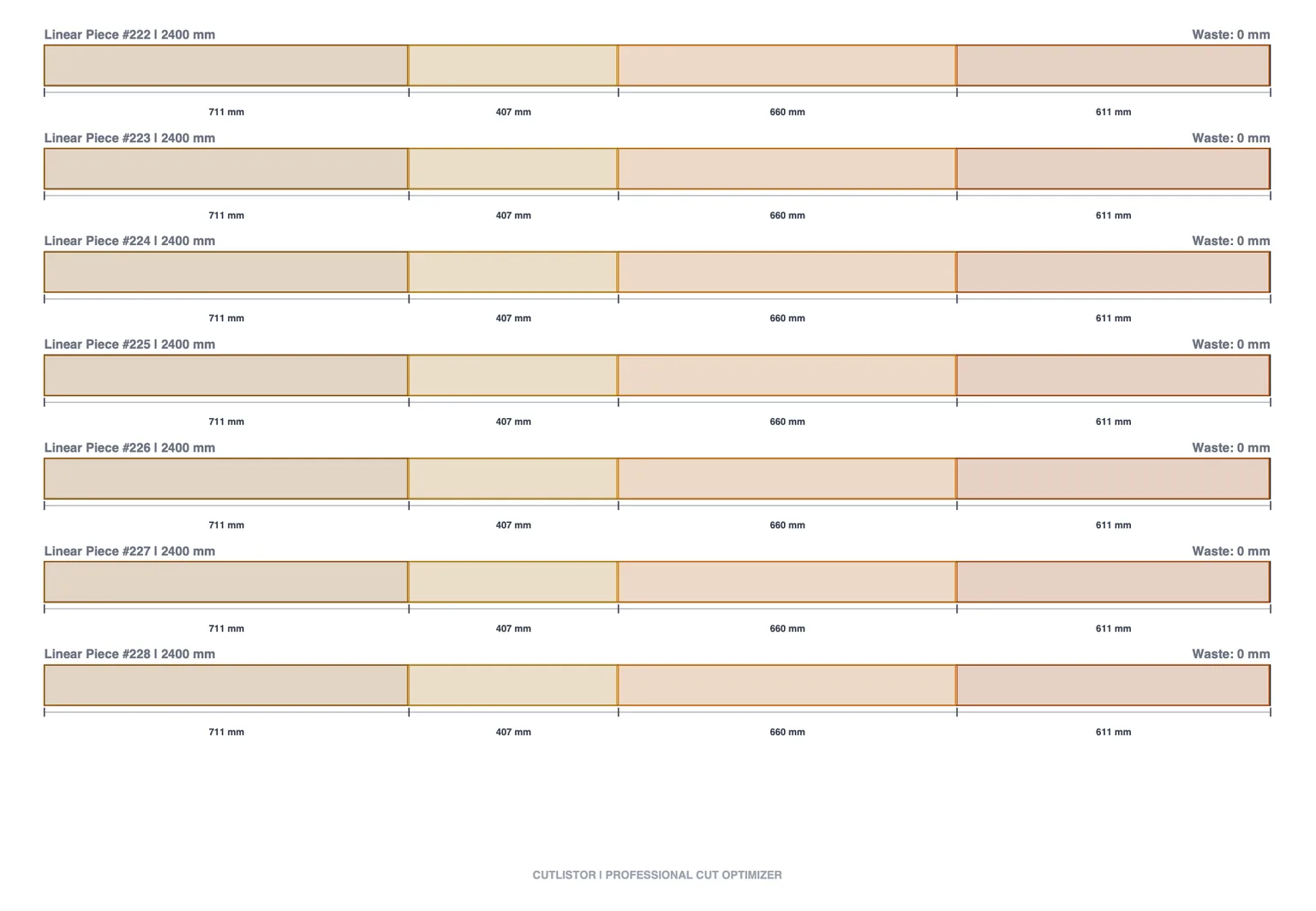
Twelve pieces at 1.2 m from 6 m bars with 3 mm kerf is a classic 1D cutting stock question. The linear optimizer sequences cuts and reports stick count plus offcuts.
2D example: panel nest
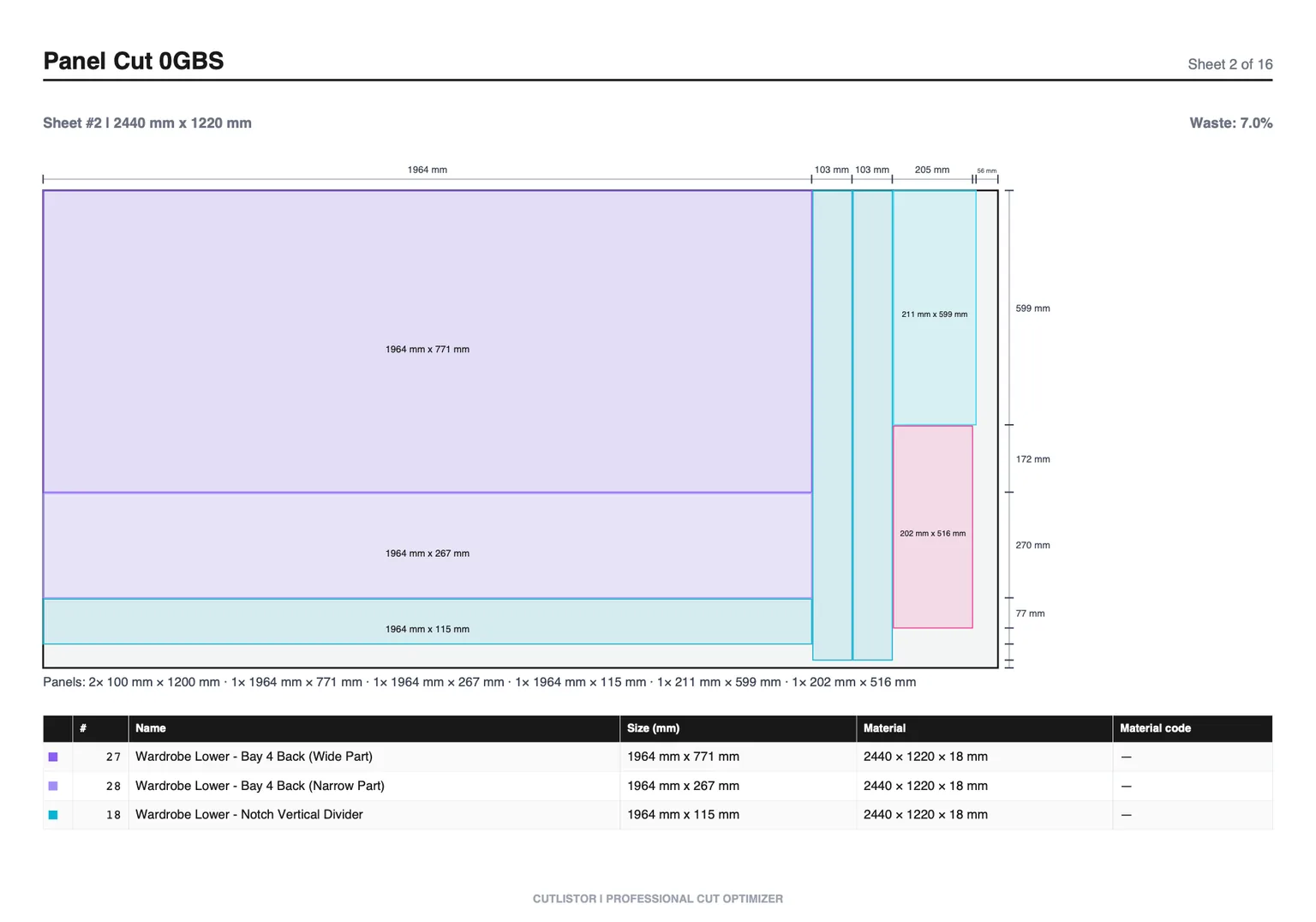
Twenty cabinet rectangles on 2440×1220 mm sheets with grain locked on doors is a 2D problem. The sheet optimizer packs parts, shows sheet count, and exports PDF diagrams.
Tools vs spreadsheets
Spreadsheets tally area and length but do not auto-nest with kerf. Browser optimizers like Cutlistor generate layouts and PDFs from the same part list you already maintain.
FAQ
- What is the cutting stock problem?
- Dividing fixed stock lengths or sheets into required parts with minimal waste.
- Is 1D or 2D harder?
- Both get complex at scale. Shops pick the model that matches purchased material form.
- Do I need academic solvers?
- Most shops need fast, kerf-aware layouts they can edit, not overnight batch jobs.
- Where does Cutlistor fit?
- Free browser tools for 1D linear and 2D sheet nesting with PDF export.
- Can one job use both?
- Yes. Panels in the sheet tool, sticks in the linear tool.
Related guides
- 1D cutting optimizer explainedWhat a 1D cutting optimizer does for lumber, pipe, and bar stock, how kerf changes results, and how to try Cutlistor’s free linear optimizer online.
- 2D nesting optimizer for sheet goodsOverview of 2D nesting for sheet goods: rectangles, kerf, grain, yield, and Cutlistor’s free browser-based sheet cut list optimizer.
- Guillotine cutting on panel stockWhat guillotine-style cuts mean for nested panels, how they differ from freeform nesting, and how Cutlistor helps you plan practical shop cuts.
- Cut list optimization workflowCut list optimization techniques: stock setup, kerf discipline, sheet vs linear choice, and free tools on Cutlistor for instant cut layouts.