Article
Best Material for Cabinet Boxes: Plywood, Melamine & Hybrids
Cutlistor Team3 min read
Introduction
Cabinet boxes (carcasses) carry the hardware, hold the square, and absorb the abuse of delivery and install. Door material can change for style. Box material has to survive screws, slides, and years of loading. That is why shops treat carcass SKUs as a purchasing standard, not a per-job guess.
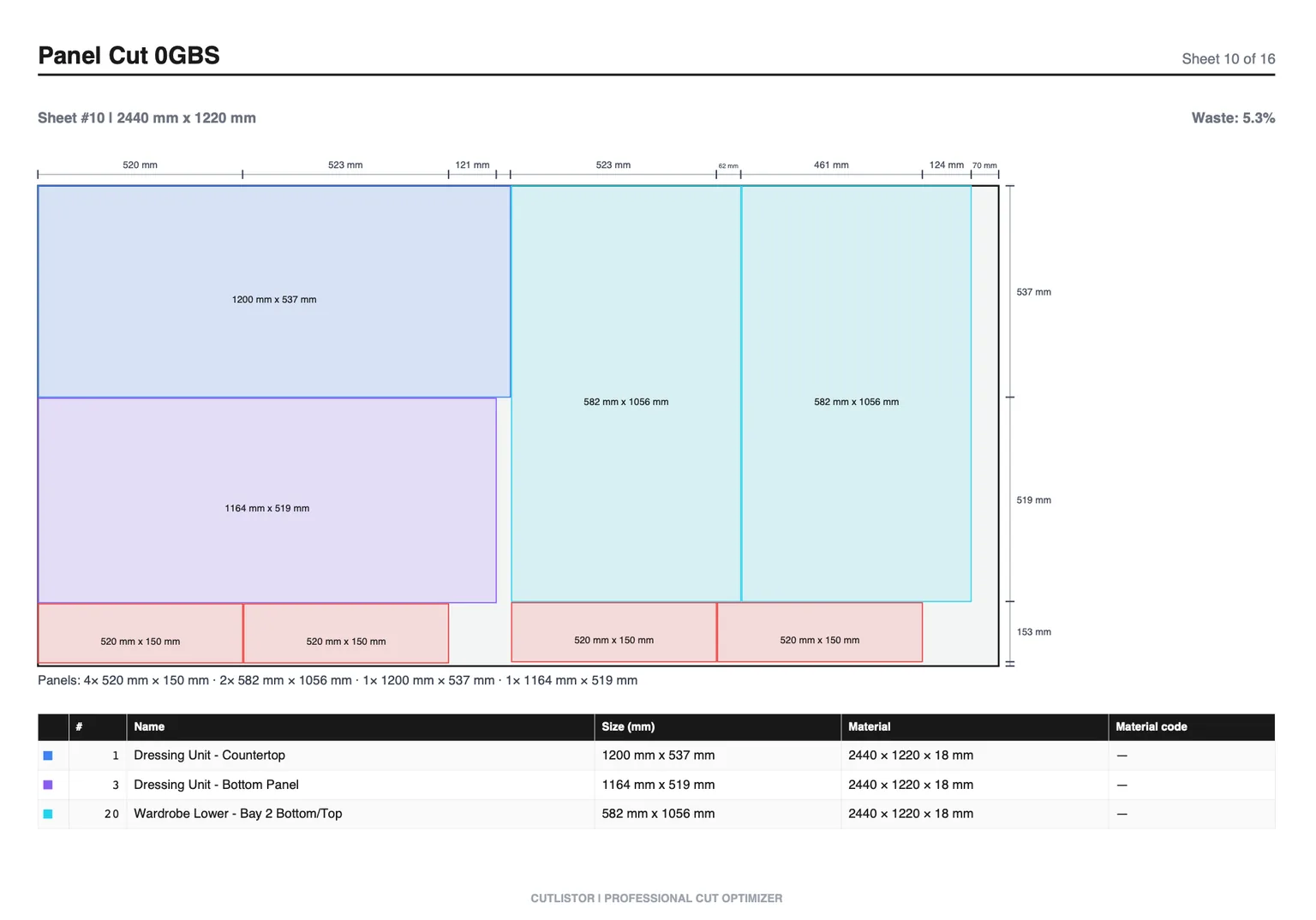
This guide ranks box materials for commercial work: custom plywood, prefinished plywood, melamine production boxes, and when hybrids make money. Approximate 2026 cost bands are planning aids only; regional variation is real.
Box Material Ranking by Job Type
| Job type | Best default box | Runner-up | Avoid |
|---|---|---|---|
| Custom painted kitchen | Veneer-core plywood or prefinished ply | Melamine if budget tight | Raw particle board |
| Production / multi-family | Melamine (TFL) | Prefinished ply | Inconsistent mixed cores |
| Closets & laundry | Melamine | Plywood shelves in wet zones | Unsealed MDF boxes |
| Sink / wet bases | Sealed plywood | Well-edged melamine | Raw MDF / open particle edges |
| Garage / utility | Shop plywood or melamine | Same as default | Fine furniture cores |
Plywood Boxes: Strength and Spec Credibility
Veneer-core plywood remains the custom standard because it holds confirmat and pocket screws, resists racking, and accepts paint or clear. Prefinished plywood cuts spray time while keeping a plywood core. Both nest on standard 4×8 or metric panels with grain lock on show interiors.
Spec actual thickness for cam and dado systems. Many sheets labeled 3/4 in are undersize; your box joinery should match measured stock.
Melamine Boxes: Production Economics
Melamine boxes win when edgebanding and panel processing are already efficient. Faces arrive finished; color consistency is high; wipe-clean interiors sell to many clients. The shop must control chip-out, banding quality, and fastener choice.
Price the full box: sheet + banding + labor. Melamine often beats unfinished plywood after finishing labor is included, even when sheet price looks closer.
Why Full MDF Boxes Are Rare in Kitchens
MDF is excellent for paint doors, not the default for kitchen carcasses. Weight, moisture risk at sinks, and screw repair headaches push shops toward plywood or melamine boxes with MDF doors instead.
If a designer insists on paint-grade interiors, paint plywood or use prefinished panels rather than building the entire wet-zone carcass from raw MDF.
Cost, Thickness, and Yield for Box Runs
| Box part | Common thickness | Material note |
|---|---|---|
| Sides / ends | 3/4 in (18–19 mm) | Primary carcass stock |
| Decks / bottoms | 3/4 in | Same as sides unless system differs |
| Fixed shelves | 3/4 in | Plywood preferred on long spans |
| Backs | 1/4–1/2 in | Plywood or melamine; square the box |
| Stretchers | 3/4 in | Often same as sides |
Nest Boxes Before You Buy
Enter every side, deck, and shelf for the run, set kerf to your saw, and read sheet count before the PO. Cutlistor provides sheet and linear optimizers in the browser with PDF cut plans. It is not a cabinet design suite.
On the free plan you can edit parts and re-optimize without limit — those actions are never counted. What is counted is finished output: PDF exports and new projects draw down an allowance of 3 per day. The working list tops out at 20 rows, spreadsheet imports at 5 rows per file, and nothing persists once you leave.
Pro is $12/mo for saved projects and DXF when CNC needs the rectangles.
FAQ
Can boxes mix plywood and melamine?
Yes, by part role: for example plywood sink bases with melamine uppers, or melamine boxes with plywood long shelves. Keep separate nests and label parts clearly for the floor.
Should cabinet boxes be Baltic birch?
Usually no for full kitchens. Baltic birch shines for drawer boxes and exposed-edge work. Full carcasses in Baltic birch are a premium specialty, not the default cost path.
Conclusion
Best material for cabinet boxes means matching carcass SKU to bid tier: plywood or prefinished ply for custom strength, melamine for production economics, hybrids for wet zones and shelves. Nest before you buy and keep door materials on their own stock rows.