Article
How to Reduce Offcuts in Cabinet Production
Cutlistor Team3 min read
Introduction
Offcuts are the strips and rectangles left after a cabinet nest. Some are reusable stock. Most become trip hazards and unpaid material if the shop never planned their next use. Reducing offcuts means designing nests and schedules so leftovers die less often.
This guide is for production casework: melamine kitchens, plywood shops, and MDF door programs that run multiple jobs per week.
Define usable offcut vs scrap
| Offcut type | Action | Owner |
|---|---|---|
| ≥ shelf-depth strip, full length | Rack as stock; enter next nest | Lead hand / inventory |
| Door-sized rectangle | Hold for next door pack same SKU | Door dept |
| Narrow rip < 50 mm | Scrap or cleat bin only | Floor |
| Mixed finish mystery piece | Scrap (do not gamble) | Floor |
Batch jobs to consume leftovers in the same nest
The best offcut is the one that never leaves the nest as leftover. Combining two same-SKU jobs often fills regions that a single vanity leaves empty. Schedule cutting so both jobs can share the saw day.
Nest settings that shrink leftover area
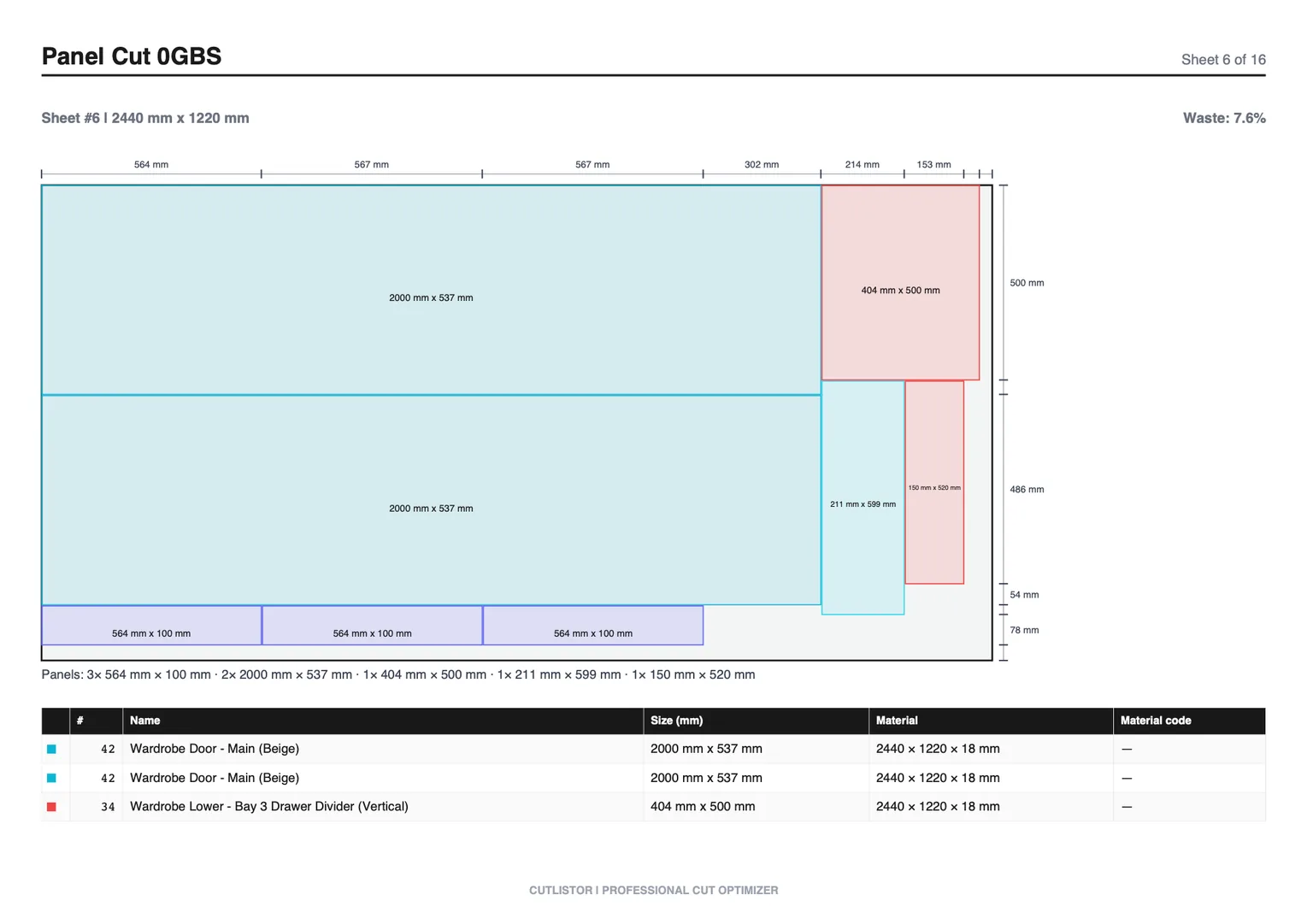
Allow rotation on hidden parts. Enter measured kerf so the nest does not claim impossible packing. Use the real supplier sheet size. Over-constrained grain on interiors is a common source of large empty rectangles.
Worked example: remnant reuse across a week
| Practice | Sheets/week | Cost at $84/sheet | Offcut outcome |
|---|---|---|---|
| Solo nests, ignore remnants | 18 | $1,512 | Rack overflow; new sheets for fillers |
| Batched nests + remnant stock | 15 | $1,260 | Fillers cut from labeled drops |
| Difference | −3 | $252 | Less scrap handling time |
Do not forget linear offcuts
Scribe, edge stock, and face-frame sticks create tails too. Combine linear lists across jobs on the same profile and run the linear optimizer so short parts pack into long-bar drops.
Cutlistor habits that starve the scrap bin
On the free plan you can edit parts and re-optimize without limit — those actions are never counted. What is counted is finished output: PDF exports and new projects draw down an allowance of 3 per day. The working list tops out at 20 rows, spreadsheet imports at 5 rows per file, and nothing persists once you leave.
FAQ
Can we reach zero offcuts?
No. Kerf and some trim always exist. The goal is fewer unusable leftovers and fewer full sheets bought while usable drops sit unlabeled.
Are door packs worse for offcuts?
Grain-locked door packs often leave larger remnants. Batch door jobs on the same SKU and keep door-sized drops for the next pack.
Is remnant labeling worth the time?
If you buy sheet goods weekly, yes. One avoided sheet often pays for the labeling time many times over.
Floor Practice That Protects Yield
An offcut is not waste until you decide it is. The rules that draw that line belong in the cut list and the rack policy, not in the sawyer's head.
Set kerf from a measured cut, then decide per part whether rotation is allowed. Parts that must hold grain constrain the nest; the ones that do not are what let the optimizer fill awkward corners.
A remnant rack without labels is a waste pile with better lighting. Size, material, and thickness on every piece, plus a hard rule for what does not get kept at all.
Codify the offcut rules so the rack stays an asset instead of slowly turning into storage.
- Kerf from a test cut on the same material family
- Grain lock on doors, gables, and show shelves
- Trim allowances decided before nesting, not at the saw
- Offcut shelf with minimum size rules your shop respects
Conclusion
Reducing offcuts in cabinet production is policy plus nesting: define usable sizes, batch same-SKU work, nest with real kerf and smart grain rules, and feed remnants back into the next nest. Scrap bins shrink when purchasing follows that loop.