Article
How to Choose Plywood for Furniture (Grade, Core & Face)
Cutlistor Team4 min read
Introduction
Furniture plywood is not one product. The same 3/4 in label can mean a void-filled softwood core with a thin face, or a dense birch multi-ply that machines like a dream. Choosing well means matching grade, core, face, and thickness to the job — then cutting so you do not waste the expensive sheet.
This guide walks through what the stamps mean, which cores work for cabinets and case goods, when Baltic birch is worth it, and how to nest furniture parts without fighting grain direction.
Understand plywood grades
| Grade signal | What you get | Furniture use |
|---|---|---|
| A / A1 face | Smooth, few patches, paint or clear-ready | Visible tops, doors, show faces |
| B face | Solid, some repairs allowed | Good painted or stained secondary faces |
| C / D faces | Knots, patches, rough | Hidden backs, shop jigs only |
| Cabinet / furniture grade | Sanded both sides, consistent core | Default for case goods |
| CDX / sheathing | Rough, voids possible | Avoid for furniture |
Core types: veneer, combination, and lumber
The core drives screw holding, flatness, and edge quality more than the face veneer does. Two sheets with the same maple face can feel completely different on the bench if one is veneer core and the other is combination core.
For wall cabinets that get hung and moved during install, a light veneer core saves your back and holds screws better than a heavy combination core of the same face grade. For wide veneered tabletops that must stay flat, combination or MDF core often wins. Match core to the failure mode you care about — sag, screw tear-out, or telegraphing — not to a brand name.
- Veneer core: layers of softwood or hardwood veneer. Light, strong, classic furniture plywood. Watch for voids in cheaper grades.
- Combination core: veneer faces over MDF or particleboard middle. Flatter for veneering; heavier; edges need care.
- Lumber core: solid strips under faces. Excellent screw holding; less common and pricier.
- Baltic birch / multi-ply birch: many thin birch plies, void-free when true to grade. Outstanding for drawers and exposed edges.
Face veneer species and appearance
Face veneer is what people see. Maple, birch, oak, walnut, cherry, and paint-grade hardwood faces are common. Rotary-cut faces look more “plywoody”; plain-sliced or rift looks closer to solid lumber.
For clear finish furniture, buy the face you want to show and inspect sheets in person when possible — color and figure vary by flitch. For paint, a smooth maple or birch sanded face (or MDF if you skip plywood) saves prep time.
Book-matched or sequenced faces matter on wide tops and door sets. If sequence matters, mark sheets before nesting and lock grain so the optimizer does not rotate show parts.
Thickness by furniture part
| Part | Typical thickness | Notes |
|---|---|---|
| Carcass sides / tops | 18–19 mm (3/4 in) | Main structure |
| Shelves (short span) | 18–19 mm | Add cleats or thicker for long spans |
| Drawer sides / bottoms | 12 mm sides; 6–12 mm bottoms | Baltic birch popular for drawers |
| Cabinet backs | 6–12 mm | Separate material group in the nest |
| Door slabs (ply) | 18–19 mm | Or use MDF for paint-grade |
| Tabletops (with edging) | 18–25 mm | Consider torsion box or solid edge |
Practical buying checklist
Walk the yard with a short list so you do not overbuy grade you will hide, or underbuy for show faces.
- List parts by visibility: show face, secondary face, completely hidden.
- Match core to hardware: hinges and drawer slides need solid screw holding.
- Check flatness — sight down the sheet; reject banana bows for doors and tops.
- Note actual thickness with calipers for joinery.
- Ask about glue type (interior vs exterior) if humidity is a factor.
- Price per usable square foot after waste — not just per sheet. Nest before you buy.
When plywood is not the answer
Painted doors often look better in MDF. Budget carcasses may use melamine particleboard. Softwood lumber still wins for face frames and solid tops. Compare materials honestly before locking a cut list.
Turn the shopping list into a cut plan
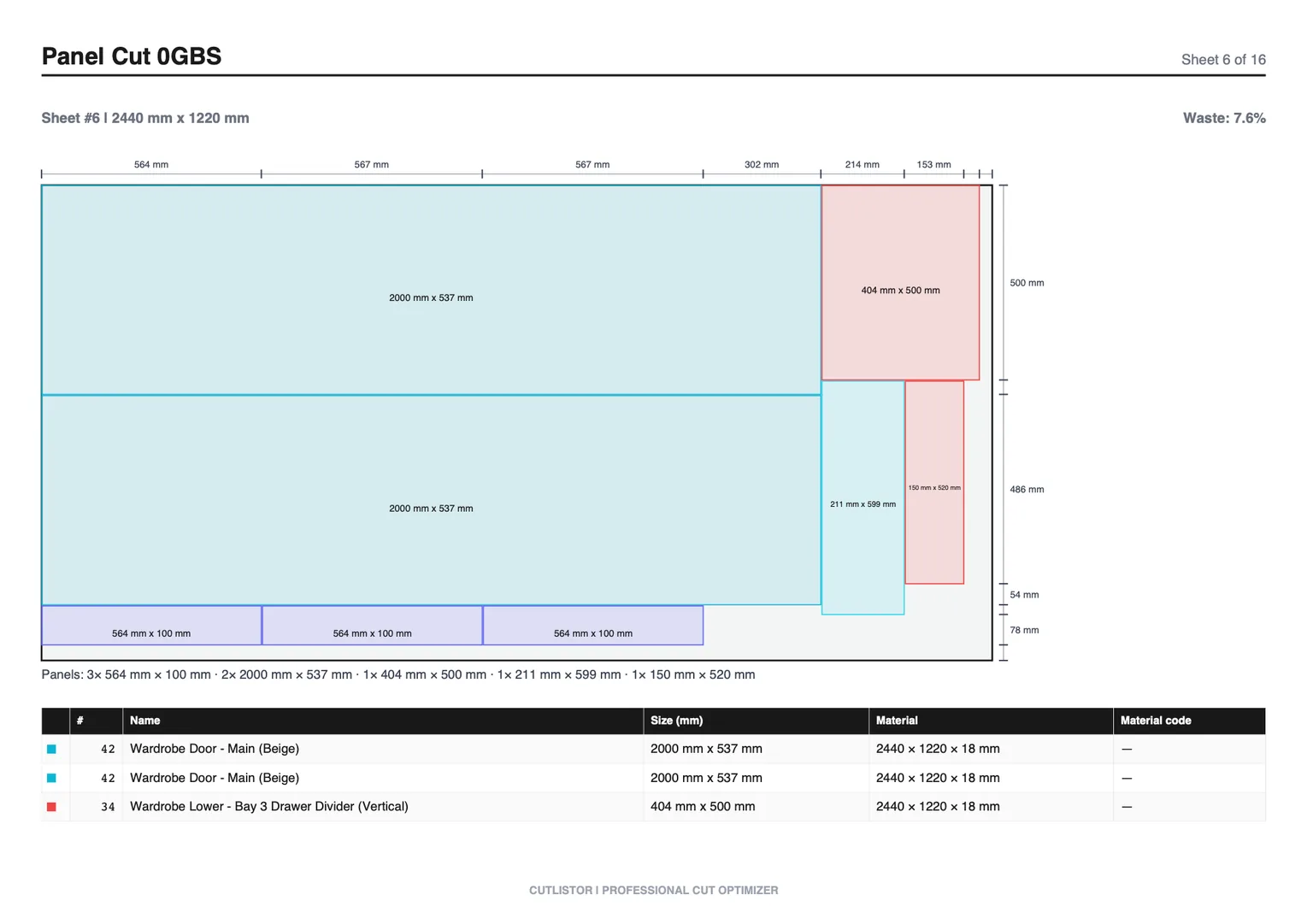
Once grade and thickness are chosen, build a cut list: every rectangle with width, height, quantity, and material label. Separate thicknesses into material groups. Lock grain on doors, visible sides, and sequenced tops.
Cutlistor nests furniture plywood as sheet stock with kerf subtracted on every cut line. Use the free sheet optimizer for layout and PDF cut plans (3 PDF exports/day and 20 part rows on the free tier). Face-frame lumber belongs in the linear optimizer.