Optimize Sheet Materials
Nest parts on steel, stainless steel, aluminum, brass, copper, acrylic, and composite panels. See sheet count and yield before you buy stock.
Open Free Sheet OptimizerFrom design to finished parts, with material planning built in.
Metal fabrication turns flat stock, plate, tube, and bar into finished components through cutting, bending, machining, welding, and finishing. It powers construction, automotive, aerospace, HVAC, marine, agriculture, signage, furniture, and industrial automation.
Cutting and welding get the attention: but efficient material planning is just as important. Poor nesting, wrong stock sizes, and unused offcuts quietly erase margin on every job.
Free sheet and linear optimizers for steel, stainless, aluminum, and stock lengths.
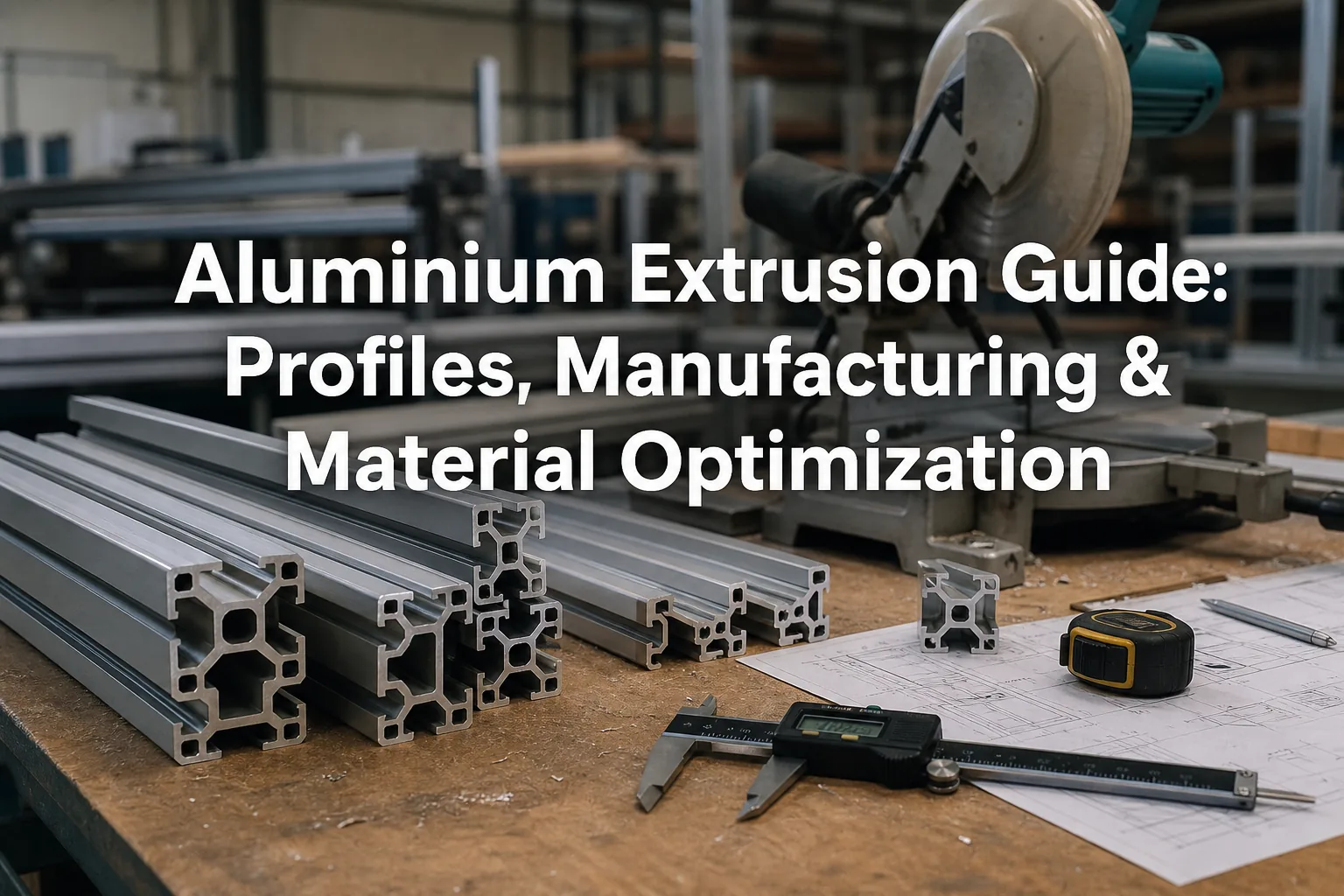
Metal fabrication is the process of cutting, shaping, joining, and finishing metal stock into parts, assemblies, and structures. Fabricators start with purchased material (sheet, plate, bar, tube, pipe, angle, channel, or extrusion) and transform it into something a customer can install or assemble.
Fabrication is not the same as manufacturing in the mass-production sense. Manufacturing often implies high-volume, repeatable production of the same part. Fabrication usually means custom or short-run work: one-off frames, brackets, enclosures, stair stringers, machine guards, or small batches with frequent design changes.
A typical fabrication workflow moves from design and material selection, through estimating and cutting, into forming, machining, welding, finishing, assembly, and inspection. Common projects include structural steel frames, sheet metal enclosures, aluminum assemblies, stainless sanitary equipment, platforms, ductwork, brackets, and architectural metalwork.
Whether the shop laser-cuts stainless panels or chops square tube for frames, the job succeeds or fails on both craftsmanship and material planning.
Most fabrication jobs follow the same stages, even when equipment and materials differ. Understanding each stage helps shops quote accurately, plan capacity, and reduce rework.
Design defines geometry, tolerances, weld symbols, finishes, and how parts fit together. Drawings, 3D models, and DXF profiles become the source of truth for cutting and bending.
Alloy, thickness, temper, and form (sheet, plate, tube, bar) affect cost, cut method, corrosion resistance, and strength. Choosing the wrong stock size can force expensive leftovers before the first cut.
Estimating converts the bill of materials into sheet counts, bar lengths, labor hours, and scrap assumptions. Accurate nesting and linear optimization at this stage protect both the quote and the margin.
Laser, plasma, waterjet, shear, saw, or punch separates parts from stock. Kerf width and nesting strategy determine how much usable material remains.
Press brakes and rollers form flanges, channels, and curves. Bend allowances must be planned when nesting so finished dimensions match the drawing.
Drilling, tapping, milling, and CNC machining add holes, pockets, and precision features that cutting alone cannot deliver.
MIG, TIG, stick, and other processes join components into assemblies. Fit-up quality depends on accurate cut lengths and square parts from earlier stages.
Grinding, blasting, powder coating, anodizing, plating, or polishing prepare parts for appearance and corrosion resistance.
Hardware, fasteners, gaskets, and subassemblies come together. Consistent part dimensions from optimized cutting reduce fit issues on the floor.
Dimensional checks, weld inspection, and finish verification close the job. Traceability back to material certificates matters in structural, food-grade, and aerospace work.
Shops often specialize by material, thickness, or end market. These categories overlap, but each has different equipment, tolerances, and waste patterns.
Sheet metal fabrication focuses on thinner flat stock formed into enclosures, panels, ducts, brackets, and covers. Laser or punch cutting plus press-brake forming dominate. Nesting density on the sheet has a direct impact on cost.
Structural work uses beams, columns, plate, angle, and channel for buildings, platforms, and industrial structures. Cutting, coping, drilling, and welding are central; linear stock planning matters as much as plate nesting.
Aluminum fabrication covers sheet, plate, and extrusions. Light weight and corrosion resistance make it common in transportation, architecture, and machine frames. Extrusion cut lists are a classic linear optimization problem.
Stainless demands controlled cutting and finishing for corrosion resistance and appearance, common in food, medical, marine, and architectural work. Material cost makes waste especially expensive.
Precision fabrication emphasizes tight tolerances, clean edges, and repeatable setups, often laser cutting, CNC bending, and careful inspection. Accurate nesting still matters because scrap from rejected layouts adds cost even when labor is high.
Custom shops build one-off or low-volume projects from customer drawings. Quoting speed, remnant reuse, and flexible nesting become competitive advantages when every job is different.
Material choice drives process selection, kerf assumptions, finishing, and scrap value. Fabrication shops routinely work with:
Affordable and widely available as sheet, plate, tube, and bar. The workhorse for frames, brackets, and general fabrication. Plasma and laser cutting are both common.
Higher cost and work-hardening behavior require careful cutting and finishing. Grades such as 304 and 316 dominate sanitary and corrosive environments.
Light, corrosion-resistant, and often supplied as sheet or extrusion. Softness and thermal conductivity affect laser and machining parameters.
Zinc-coated steel for outdoor and HVAC applications. Coating considerations affect welding and finishing; nesting still determines how many sheets a duct or panel run consumes.
Used for electrical, architectural, and specialty work. High material cost means every inefficient nest hurts the quote.
Chosen for appearance, machining characteristics, and corrosion resistance in fittings, hardware, and decorative fabrication.
Each process has a different kerf, heat-affected zone, and ideal part geometry. Matching process to job, and accounting for kerf in the cut list, improves both quality and yield.
High-precision thermal cutting with a narrow kerf, ideal for sheet and plate profiles. Excellent for dense nests when part spacing and lead-ins are planned correctly.
Faster and more economical on thicker plate. Wider kerf than laser, so nesting and kerf settings must reflect the actual torch.
Cold cutting for heat-sensitive materials and thick stock. Kerf and pierce strategies differ from thermal processes; still a 2D nesting problem on the plate.
Turret punches create holes and forms efficiently on sheet metal. Nesting often balances punch tooling paths with material utilization.
Bends flat patterns into 3D parts. Flat-pattern dimensions must be correct before nesting, or every bent part will be wrong.
Forms cylinders, cones, and curves from plate or sheet. Blank size and grain orientation still matter before the roll.
Joins cut and formed parts. Accurate lengths and square ends from optimized cutting reduce fit-up time at the booth.
Adds precision features after or instead of cutting. Bar and billet machining pairs naturally with linear stock planning.
Equipment defines capacity, tolerance, and the kerf you should enter into an optimizer. Common shop tools include:
Whatever the machine, the cutting plan should reflect real stock sizes and process kerf, not idealized rectangles on a whiteboard.
Metal fabrication sits behind products and infrastructure across nearly every industrial sector:
Rising steel prices, aluminum increases, and expensive specialty alloys make scrap a profit problem, not a housekeeping detail.
Waste shows up as bad nesting, poor planning, wrong stock sizes, ignored kerf, and offcuts that never get reused. A nest that looks “good enough” on one job can still leave large unusable remnants that never return to inventory.
Reducing waste has a direct impact on profit: every percentage point of yield you recover is material you do not have to buy again on the next order. See our guides on how to reduce metal waste and material yield for shop checklists and yield math.
Cutting skill does not fix a bad material plan.
Optimize the layout first: then cut with confidence.
Sheet optimization (2D nesting) arranges rectangular and flat-pattern parts on the plate or sheet sizes you buy. Core concepts include:
Enter your actual sheet or plate dimensions, set process kerf, and nest parts by material and thickness so purchasing quantities match the cutting plan. For a deeper walkthrough, read sheet metal nesting and the metal cut list optimizer guide.
Some materials and finishes have directional constraints. Always set kerf for your laser, plasma, waterjet, or saw. Nesting decides part placement; material yield tells you how efficiently each sheet is used; offcuts become candidates for remnant reuse on the next job.
Track utilization so you can compare layouts and choose the one that reduces purchased sheets without creating unusable scrap. Material yield explained covers the math behind those percentages.
Not every fabrication part comes from a sheet. Use linear (1D) optimization for stock sold by length:
Enter available stock lengths and kerf for your bandsaw or cold saw. Optimizing cut sequences reduces leftover shorts that are too small to use and lowers the number of bars you need to buy. See the linear optimization guide and aluminum extrusion optimization for worked examples.
Estimating is where fabrication shops win or lose jobs. A quote that undercounts sheets or bars destroys margin; a quote that pads material too heavily loses the bid.
Before the first cut, you need a clear picture of sheet count, stock lengths, material cost, expected waste percentage, and how remnants will be handled. Nesting and linear optimization turn a parts list into purchasable quantities instead of square-footage guesses.
Modern shops increasingly run the cut list through an optimizer during estimating, not only after the PO is issued, so purchasing, scheduling, and quoting share the same numbers.
Labor gets attention because it is visible on the floor. Material waste is quieter, and often larger, especially when steel and aluminum prices rise.
A better layout uses less material. Less material lowers cost. Lower cost improves profit and lets you submit more competitive quotes without guessing.
Better layout → less material → lower costs → higher profit → more competitive quotes.
That chain is why material optimization belongs next to cutting and welding in any serious fabrication workflow.
Cutlistor is one of the modern tools fabrication shops use to plan material before cutting. It is not a replacement for CAM or your laser software, it is the estimating and cut-list layer that answers how many sheets and sticks a job needs, and how to arrange parts with less waste.
Use it to optimize sheet materials and linear stock, import existing designs, and generate production-ready cutting plans in minutes.
Nest parts on steel, stainless steel, aluminum, brass, copper, acrylic, and composite panels. See sheet count and yield before you buy stock.
Open Free Sheet OptimizerPlan square tube, round tube, pipe, flat bar, channel, angle, and aluminum extrusion from the stock lengths you purchase.
Open Free Linear OptimizerFabrication shops rarely start from a blank table. Cutlistor can extract parts, generate cut lists, and optimize material usage without manually recreating every component.
Review extracted dimensions, group by material, then run sheet or linear optimization for the job.
When the design already exists in CAD, import a compatible 3D model instead of retyping every part.
Cutlistor supports formats such as:
Use this for workflows from Fusion, Blender, and other tools that export glTF or Collada.
Shop drawings and customer PDFs are common starting points in custom metal fabrication. Cutlistor uses AI plan scanning to help pull part data from those sources; true-shape DXF nesting for the laser still belongs in your CAM software.
AI-assisted import can help extract part information from:
Always review extracted sizes and material codes before generating the final cutting plan, especially on precision or certified work.
Upload a drawing and build a cut listIf you are sourcing a metal fabrication company or metal fabrication services, look beyond the lowest hourly rate. Capability and process discipline determine whether parts arrive on time and on dimension.
Shops that plan material carefully (nesting sheets and sequencing bar stock) tend to quote more honestly and deliver with fewer shortages mid-job.
Practical guides on fabrication types, processes, materials, nesting, and waste. This pillar is the hub; every supporting article links back here.
Software roundups, comparisons, and related cut list guides for fabrication shops choosing nesting and estimating tools.
Whether you're cutting steel sheets, stainless steel, aluminum, composite panels, or stock lengths like tubing and extrusions, every unused offcut affects your bottom line. Cutlistor helps fabrication shops optimize material usage, reduce waste, estimate costs, and generate production-ready cutting plans in minutes.