Article
Understanding Plywood Sheet Sizes (4×8, 5×5, Metric & More)
Cutlistor Team4 min read
Introduction
Plywood is sold in standard sheet sizes, not infinite custom blanks. The size you buy sets the maximum part you can cut without a seam and changes how efficiently a nest packs. A kitchen that nests cleanly on 2440 x 1220 mm may waste a fortune on 1525 x 1525 mm Baltic birch — or the reverse for drawer boxes.
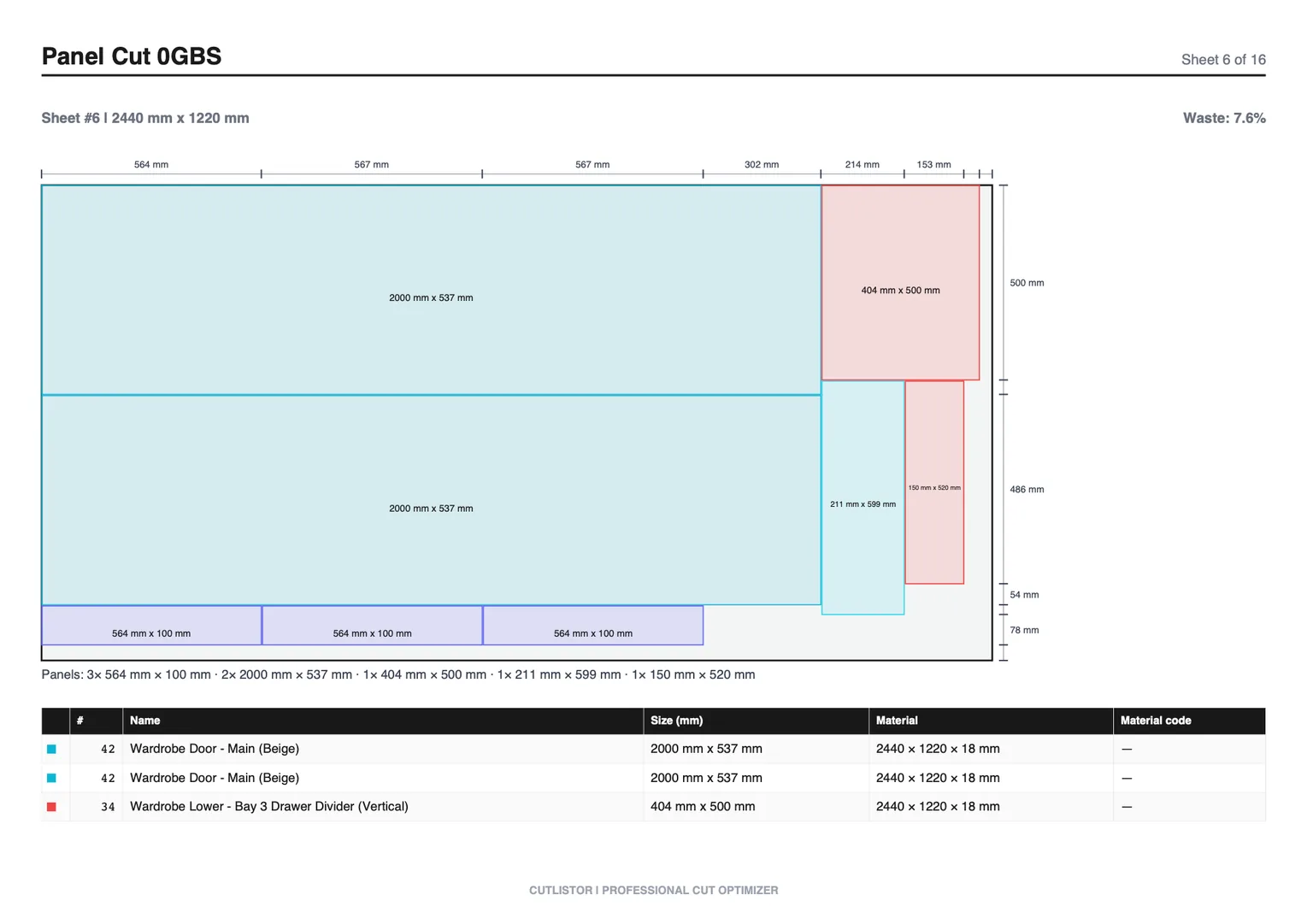
This guide lists common NA, EU, and AU sizes, Baltic birch 5x5 practice, thickness options, and how to pick a stock size before you run a cut list optimizer.
North American Standards: 4×8 and Friends
| Nominal size | Inches | Approx. mm | Common uses |
|---|---|---|---|
| 4 x 8 | 48 x 96 | 1219 x 2438 | Cabinets, general construction |
| 4 x 10 | 48 x 120 | 1219 x 3048 | Tall panels, fewer end seams |
| 5 x 5 | 60 x 60 | 1524 x 1524 | Baltic birch, shop projects |
| 5 x 8 | 60 x 96 | 1524 x 2438 | Less common; wide panels |
| 5 x 10 | 60 x 120 | 1524 x 3048 | Floors, large skins |
Actual sheets can be 1/8 in undersize on a side after sanding or trim. Measure stock for tight nests. For optimization, many shops enter 2440 x 1220 mm as the working metric stand-in for 4x8.
Metric Sheets: Europe, UK, and Australia
| Sheet (mm) | Approx. ft | Regions / notes |
|---|---|---|
| 2440 x 1220 | 8 x 4 | Common joinery sheet; near 4x8 |
| 2500 x 1250 | ≈8.2 x 4.1 | EU industrial and furniture |
| 2800 x 2070 | ≈9.2 x 6.8 | Some European furniture boards |
| 3050 x 1220 | ≈10 x 4 | Long runs, fewer joins |
| 2400 x 1200 | ≈7.9 x 3.9 | AU/NZ common building sheet |
| 1800 x 1200 | ≈5.9 x 3.9 | AU smaller sheet option |
Baltic Birch and 5×5 Sheets
Baltic birch is often sold in 5x5 ft (1525 x 1525 mm class) sheets with void-free birch plies and consistent thickness options (6, 9, 12, 18 mm common). The square format nests differently from 4x8: large cabinet gables may need two sheets where a 4x8 would take one, while small drawer parts pack efficiently.
Always set the optimizer stock size to the Baltic sheet you actually bought — do not nest 5x5 parts onto a phantom 4x8. Use the Baltic birch calculator for quick takeoffs.
Common Thickness Options
| Common callout | Typical actual | Typical uses |
|---|---|---|
| 1/4 in / 6 mm | 5.2–6.5 mm | Backs, drawer bottoms |
| 1/2 in / 12 mm | 11.5–12.7 mm | Drawer sides, light cabinets |
| 5/8 in / 15–16 mm | 15–16 mm | EU carcases, some NA hardwood ply |
| 3/4 in / 18 mm | 17.5–19 mm (often 18 or 23/32) | Carcases, shelves, doors |
| 1 in / 24–25 mm | 24–25 mm | Worktops, heavy shelves |
How Sheet Size Changes Nesting
Larger sheets reduce seams and can improve yield when parts are long. They also cost more, weigh more, and may not fit a small vehicle or saw. Smaller sheets can raise sheet count but lower waste on small parts if the nest fills each sheet.
Worked comparison: twenty 600 x 400 mm parts. On 2440 x 1220 mm with 3 mm kerf, a nest often fits about 10–12 parts per sheet depending on grain — roughly 2 sheets. On 1525 x 1525 mm, you may still land near 2 sheets but with different remnant shapes. Run both stock sizes in the optimizer when price-per-sq-ft differs.
Choosing Stock Size for a Job
Pick stock from what the yard has in the grade and face you need, then nest. Do not design every panel to 4x8 if your supplier only stocks metric 2500 x 1250 in the veneer you specified.
- Long parts (full-height gables): prefer 8 ft / 2440+ mm length
- Square utility parts (drawers, jigs): 5x5 Baltic often wins on quality
- Transport limits: 5x5 or 2400 x 1200 may be the practical max
- Price: compare cost per usable sq ft after a nest, not sticker price alone
Setting Sheet Size in Cutlistor
Enter length and width of the stock you will cut, plus thickness for labeling, kerf for the saw or CNC, and grain constraints on parts. Import parts via CSV/XLSX (free tier up to 5 CSV rows; 20 part rows total) or type them in. Nest in the browser, then export PDF cut plans (3/day on free). DXF and AI plan import use paid quotas.
If you switch from 4x8 to 5x5 mid-quote, re-nest before you lock the material order — sheet count can jump even when total part sq ft stays flat.