Article
How Cut List Optimization Can Improve Cabinet Shop Profit
Cutlistor Team3 min read
Introduction
Cabinet shop profit is squeezed by sheet prices, fixed install dates, and labor that cannot expand as fast as the quote book. Cut list optimization attacks the levers you control before the saw starts: how many sheets you buy, how accurately you price them, and how often the floor stops for missing or wrong parts.
This article translates nests into margin language for owners and estimators.
Four profit levers optimization touches
| Lever | Without optimization | With optimization |
|---|---|---|
| Sheet PO | Pad factor; extra sheets parked | Buy nested count by material |
| Quote accuracy | Guess contingency % | Sheet lines tied to nests |
| Remakes | Short parts from ignored kerf/grain | Inputs forced before cut |
| Throughput | Whiteboard time per job | PDF plans; batch nests |
Worked monthly profit sketch
| Item | Calc | Monthly impact |
|---|---|---|
| Carcass sheets saved | 8 jobs × 2 × $85 | $1,360 |
| Door sheets saved | 8 jobs × 1 × $70 | $560 |
| Estimator hours returned | 8 × 0.75 hr × $55 burden | $330 |
| Remake avoidance (conservative) | 1 door set / month avoided | $400+ materials & labor |
| Illustrative total | Sum of above | ~$2,650 / month |
Your numbers will differ. The point is direction: sheet savings alone often dwarf the cost of browser nesting tools, especially when plywood or premium melamine is in the mix.
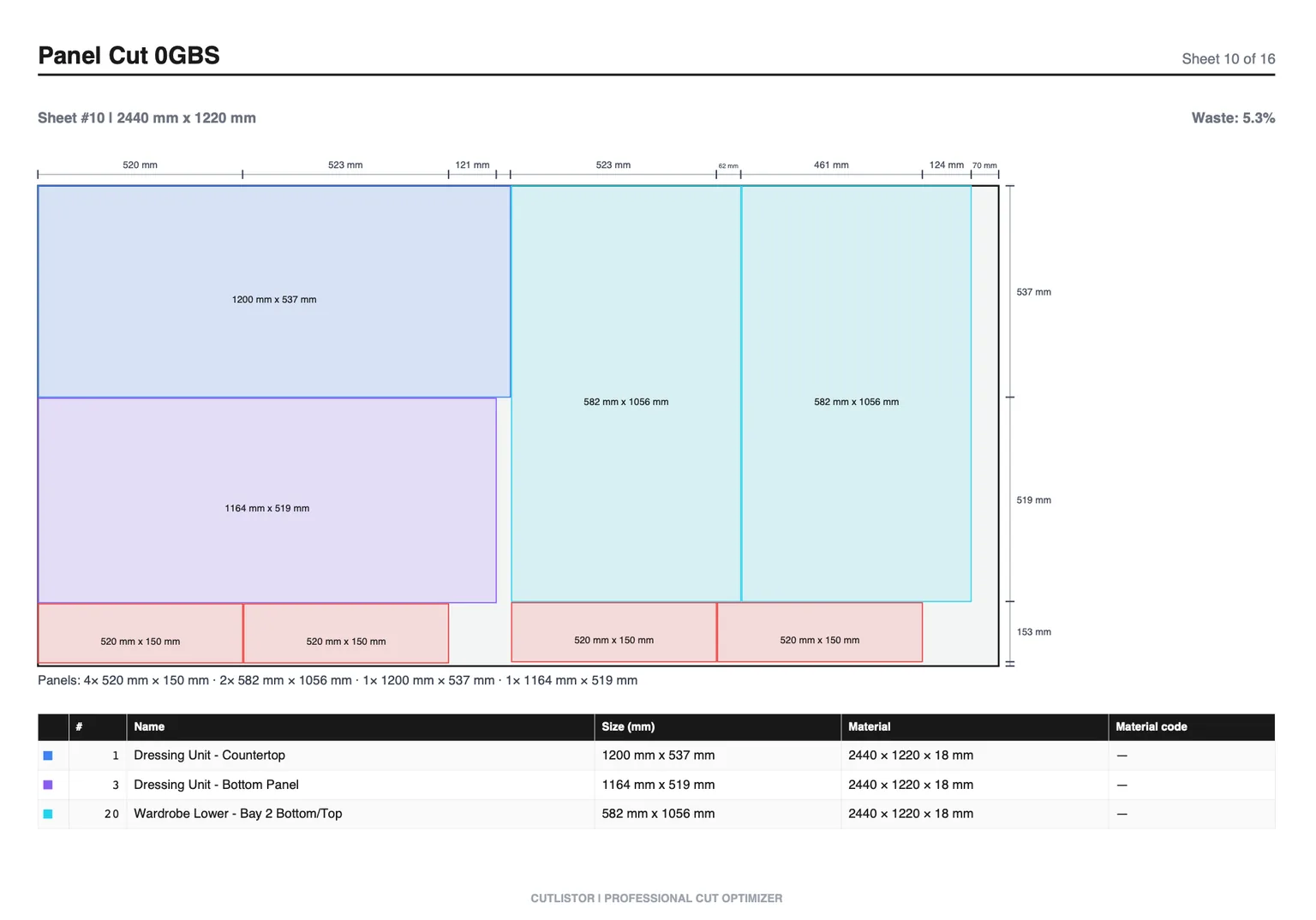
Win the right jobs at the right price
Underpriced material contingencies win work you cannot afford. Overpriced pads lose work you could have made money on. Nest-backed sheet counts let you sharpen bids without gambling. Trade clients who see yield and sheet logic also argue less about change orders.
Throughput is profit too
Hours spent redrawing rip plans are hours not drafting the next bid. Batching same-SKU jobs reduces setups and scrap handling. Fewer emergency lumberyard runs keep install crews on schedule and reduce overtime.
Inputs that protect margin
Optimization only monetizes good inputs. Measure kerf, lock grain only on show faces, match supplier SKUs, and re-nest after design changes. Bad inputs create confident wrong POs.
Cutlistor as a profit tool
On the free plan you can edit parts and re-optimize without limit — those actions are never counted. What is counted is finished output: PDF exports and new projects draw down an allowance of 3 per day. The working list tops out at 20 rows, spreadsheet imports at 5 rows per file, and nothing persists once you leave.
30-day profit plan for a cabinet shop
A practical rollout:
- Week 1: Measure kerf on each saw/CNC; set presets
- Week 2: Re-nest last five sold kitchens; log sheet delta vs what you bought
- Week 3: Nest-before-buy on every new quote; put sheet count on the PO
- Week 4: Batch two same-SKU jobs; start remnant labels
- Review: sum sheets avoided × sheet cost; decide paid-plan inventory needs
FAQ
Does this help a two-person shop?
Yes. Small shops feel sheet mistakes harder because one bad PO is a larger share of monthly material. Free-tier nesting is enough to test the habit.
How do we justify software cost?
Compare one month of documented sheet savings to subscription price. Many shops clear that bar on a handful of kitchens, then keep the throughput gains as upside.
Will optimizing push us to ugly grain layouts?
No. Lock show faces. Optimization should price appearance rules, not erase them. See the grain usage article for selective lock strategy.
Conclusion
Cut list optimization improves cabinet shop profit by tightening sheet POs, sharpening quotes, cutting remakes, and returning layout hours to selling and building. Nest before you buy, measure the sheet delta for a month, and let the material savings fund the process.