
Article
How Much Can a Cut List Optimizer Save? (Worked Examples)
Cutlistor Team2 min read
Introduction
“Optimizers save material” is vague. Shops want dollars. This article works three examples—cabinet plywood, linear hardwood, and multi-job batching—using simple assumptions you can replace with your prices.
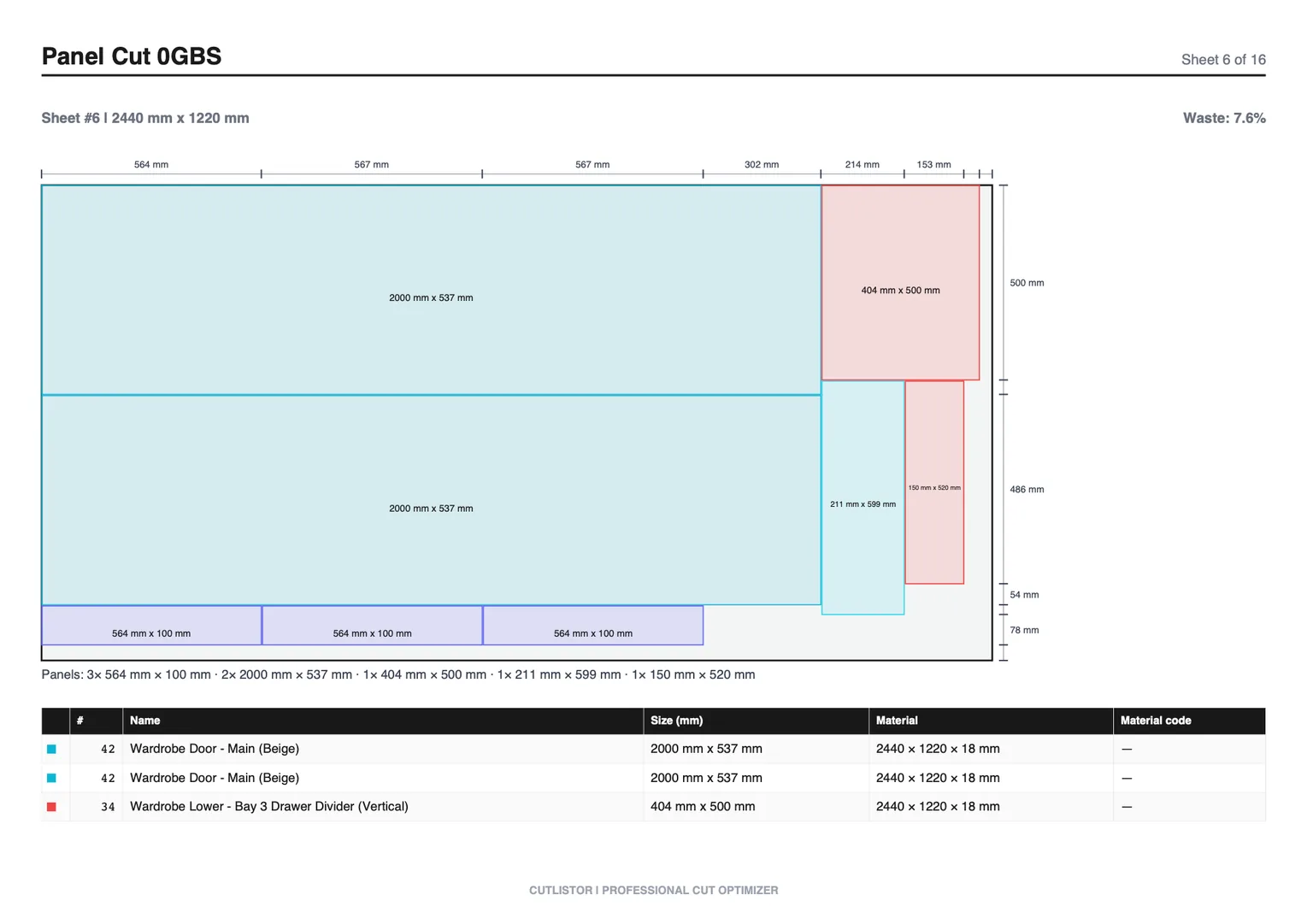
Savings come from fewer sheets or sticks, less remake labor, and faster planning. Cutlistor provides the nesting; your rates turn yield into money. For the cost model behind waste, see true cost of wood waste.
What counts as savings
| Lever | How optimizers help | Typical size |
|---|---|---|
| Sheet count | Better 2D nest + kerf | 0–2 sheets per mid kitchen |
| Board-feet | Better 1D pack | 10–30% less scrap on trim packages |
| Planning time | Import + live re-optimize | 15–60 min per job |
| Remakes | Labeled PDF, fewer typos | High variance; often largest $ |
| Batching | Shared nests across jobs | Converts remnants to parts |
Example 1: Plywood cabinet run
| Line | Manual | Optimized | Delta $ |
|---|---|---|---|
| Birch sheets | 9 × $90 | 7 × $90 | $180 |
| Back sheets | 3 × $55 | 2 × $55 | $55 |
| Planning labor | 50 min | 15 min | ~$41 |
| Total illustrative save | ~$276 |
One job does not pay for a year of software by itself—but weekly cabinets do. Scale by your schedule.
Example 2: Hardwood and trim (linear)
| Line | Amount | Cost |
|---|---|---|
| Material saved | 9 bf × $4 | $36 |
| Labor saved | 1 h × $70 | $70 |
| Job save | $106 |
Example 3: Batch two furniture jobs
Two small birch furniture pieces cut separately need 5 sheets total (3 + 2) with awkward remnants. Batched nest uses 4 sheets. At $95/sheet, material save is $95, plus one shared setup (~0.5 h × $70 ≈ $35).
Annual back-of-envelope
Free use is genuinely unmetered where it matters for cutting: change a dimension, re-nest, change it again, at no cost. The 3-per-day allowance covers PDF exports and new projects. Cut lists stop at 20 rows, imported CSV or XLSX files at 5 rows, and there is no persistence between visits.
Try the free tier on a past job: import CSV/XLSX, set kerf, compare sheet count to what you actually bought. That single A/B test is worth more than any marketing claim.
What an optimizer will not save
It will not fix wet lumber, dull blades, or designs that change after cutting. It will not invent usable grain on a defective veneer face. Pair nesting with material prep and a frozen cut list revision.
Cutlistor capabilities that drive savings
Sheet + linear optimization, kerf, grain, CSV/XLSX import, AI plan/PDF/image/sketch import, 3D glTF/GLB/Collada import, real-time re-optimize, PDF export, DXF on paid plans—all in the browser.
Next steps
Read true cost of wood waste for the full cost model. Small shops and furniture makers can jump to software fit guides. Roundups compare free and paid tools for 2026.