
Article
How to Optimize Multiple Cabinet Jobs Together
Cutlistor Team4 min read
Introduction
One vanity nest leaves awkward strips. The next vanity on the same white melamine buys a fresh sheet and makes new strips. Optimizing multiple cabinet jobs together turns those leftovers into paid parts and reduces full-sheet purchases across the week.
Batching is a production and purchasing decision: same material SKU, compatible install dates, and labels that keep parts sorted by job on the floor.
When batching helps (and when it hurts)
| Situation | Batch? | Why |
|---|---|---|
| Two kitchens, same white 18 mm melamine, installs one week apart | Yes | Shared nest cuts sheet count |
| Same plywood, different thicknesses | No | Separate stock SKUs |
| Paint MDF doors for three jobs, same booth day | Yes | High remnant reuse |
| Custom grain-matched feature wall + stock white boxes | Split | Different orientation rules |
| Rush change order likely on job A | Maybe solo | Avoid re-nesting B’s parts |
Labeling and BOM discipline for multi-job nests
Prefix part names with job codes (K2415-side, VAN09-shelf). Keep quantities correct per job inside one combined list, or nest with clear material groups. The PDF must tell the floor which stack belongs to which truck.
- One combined BOM with job prefixes, or separate imports merged carefully
- Color or stamp sheets by job after cutting
- Do not mix finishes even if thickness matches
- Record which remnants after the batch belong to inventory vs scrap
Worked example: three small jobs vs one batch
| Approach | Sheets | Material at $86/sheet | Remnant story |
|---|---|---|---|
| Three solo nests | 9 | $774 | Three awkward scrap piles |
| One batched nest | 7 | $602 | Fewer full sheets; one remnant rack |
| Savings | 2 sheets | $172 | Plus less handling |
Batching also raises throughput: one setup, one nest review, one PDF packet instead of three whiteboard sessions.
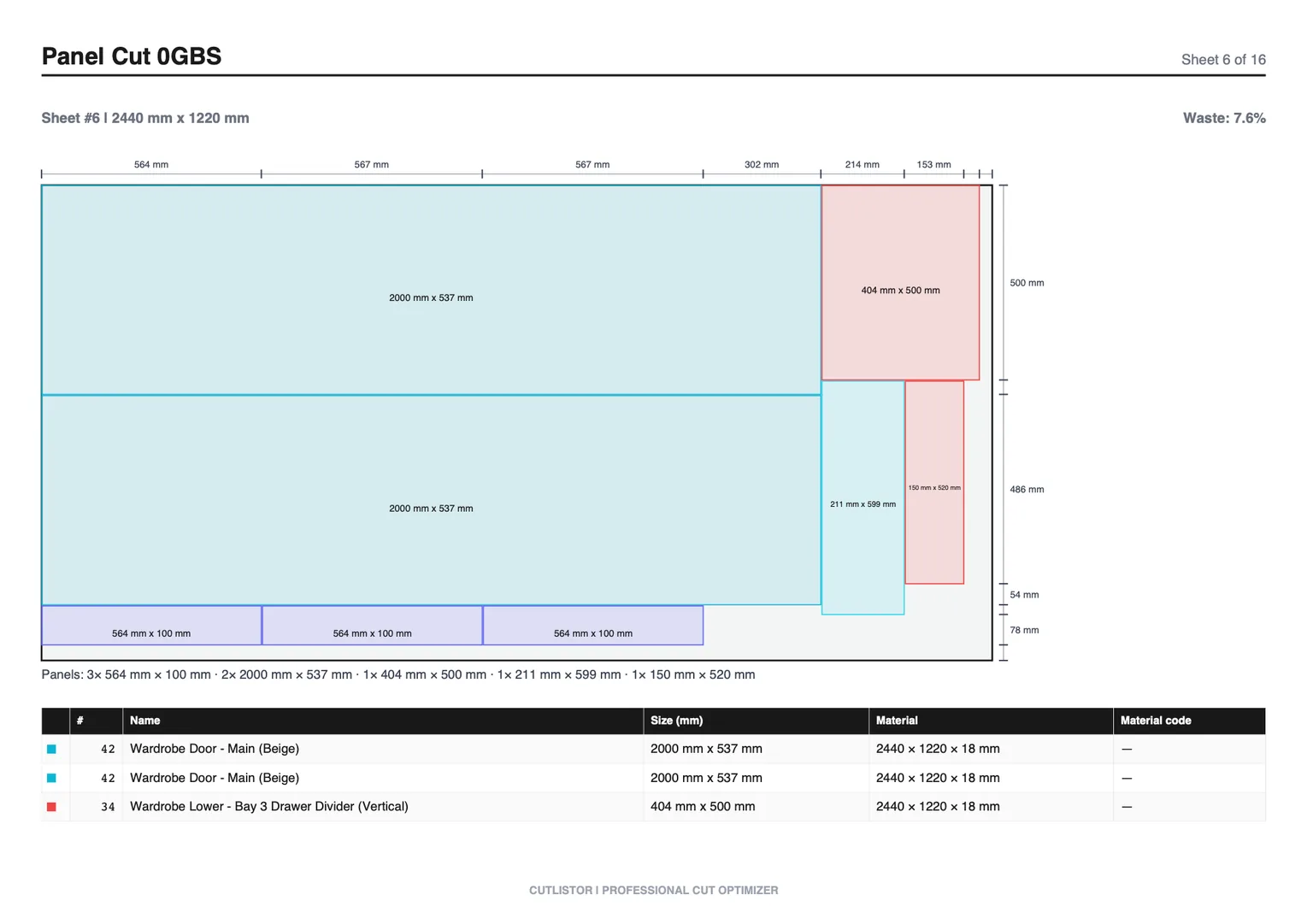
How to quote when jobs share sheets
Allocate sheet cost by part area share or by agreed sheet counts per job after the nest. Do not give every job the solo-nest sheet count when you purchased the batched total. Honest allocation protects each job’s margin and avoids double-counting waste.
Batch linear stock as well
Edge banding, scribe, and face-frame sticks also waste less when multiple jobs share stick lengths. Run the linear optimizer on combined trim lists for the same species and profile.
Cutlistor workflow for batched cabinet jobs
Cutlistor's free tier meters something different: editing parts and re-optimizing the layout are unlimited, and only PDF export and starting a new project count against a daily allowance of 3. Cut lists are capped at 20 rows, CSV and XLSX import is limited to 5 rows per file, and nothing is saved between sessions.
FAQ
How many jobs should we combine?
Start with two or three small same-SKU jobs. Very large combined lists are fine technically, but floor sorting gets harder. Optimize for your labeling discipline.
Should leftover sheets after a batch go into inventory?
Yes, if they meet your remnant size threshold. Enter them as stock on the next nest instead of buying new full sheets for cleats and fillers.
Can we batch doors across kitchens?
Yes when door material matches and finishing can take the volume. Keep grain rules consistent across the batch.
Dimension Discipline on Cabinet Jobs
Batching jobs only works if every job states sizes the same way. One list using net openings and another using post-banding finished sizes will nest together happily and produce parts that fit nothing.
The whole gain from batching comes from quantity consolidation. Merge identical parts across all jobs in the batch first, then nest — otherwise you get the risk of combined jobs without the yield that justifies it.
Batched jobs raise the cost of a late change, because one revision can invalidate a nest covering four kitchens. Re-nest only the affected material group, and cut batched sheets as late as the schedule allows.
Write the batching rules down so combining jobs stays a routine call rather than a per-job negotiation.
- One source of truth for openings vs carcase blanks
- Job number and revision date on every printed plan
- Separate sheet goods from linear face-frame stock
- Re-nest after any size change that touches a bought sheet
Conclusion
Multi-job nesting is one of the highest-leverage habits in a busy cabinet shop. Same SKU, clear labels, honest cost allocation, and a single optimized nest beat three padded solo POs every week.