Article
Best Material for Cabinet Doors: MDF, Plywood & Paint vs Clear
Cutlistor Team3 min read
Introduction
Doors sell the kitchen. Boxes hold it together. The best door material depends on finish (paint vs stain), profile (slab vs shaker), and whether your shop machines in-house or buys door blanks. Mixing door and box materials is normal; nesting them on the same sheet is not.
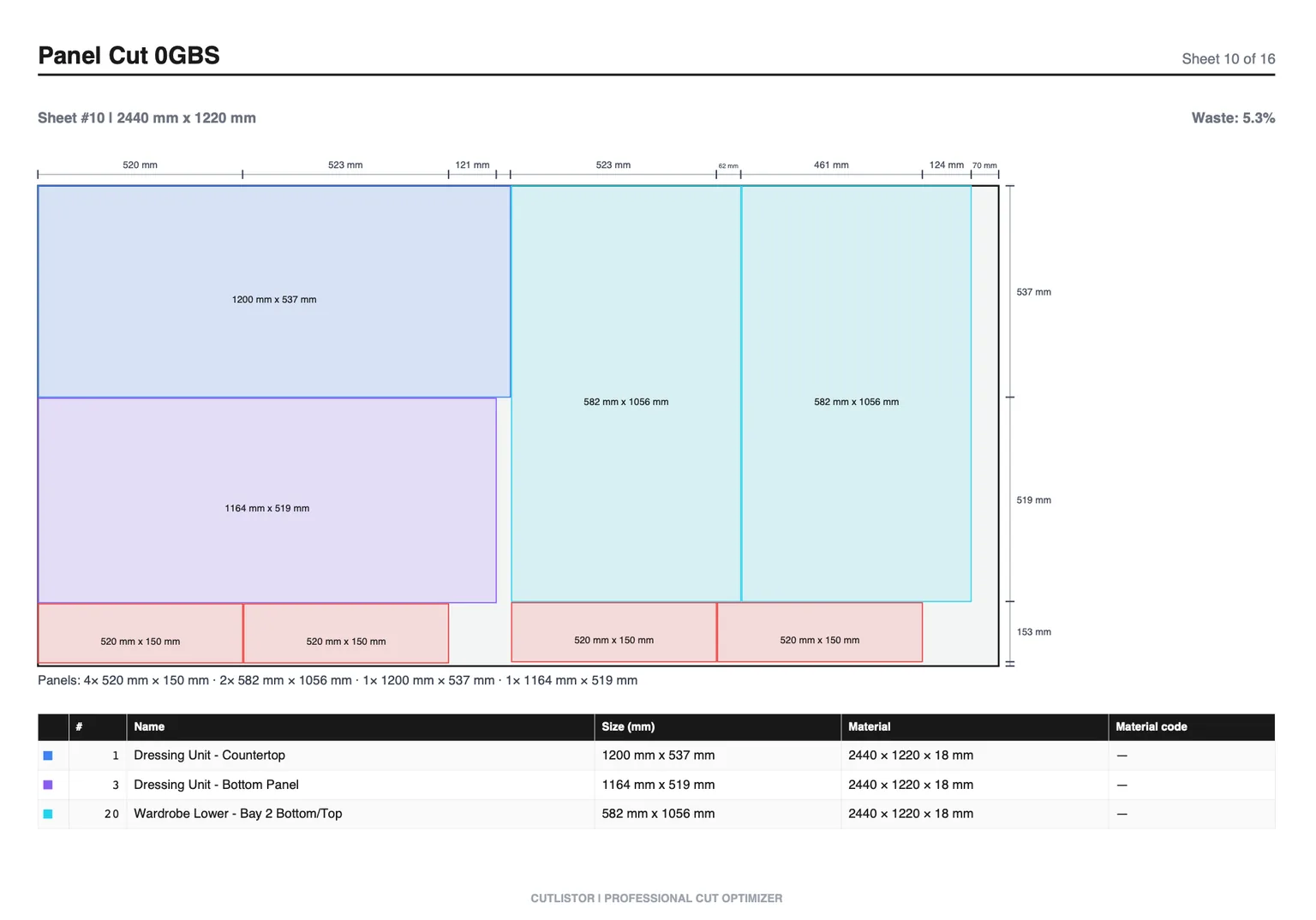
This commercial guide covers MDF, plywood, solid-wood frame systems, and melamine door options with yield and approximate 2026 cost context. Regional prices vary; verify before bidding.
Choose by Finish Path First
| Finish / style | Best door material | Why shops pick it |
|---|---|---|
| Painted slab | MDF | Flat, machines clean, takes primer |
| Painted shaker / profiled | MDF | CNC profiles without tear-out |
| Clear / stained slab | Hardwood plywood or solid | Real grain; match lots |
| Shaker with wood rails | Solid frame + plywood/MDF panel | Traditional look, stable panel |
| Production white / woodgrain | Melamine or foil systems | Speed and consistent color |
| Exterior / wet exposure | Specialty exterior-rated (rare indoors) | Standard kitchen doors stay interior-rated |
MDF Doors: The Paint-Grade Workhorse
For painted kitchens, MDF is usually the best door material. It stays flatter than many plywood slabs under heavy film builds, CNC profiles cleanly, and accepts primer well. Spec moisture-resistant MDF if your climate or site is harsh, and keep doors away from standing water.
Common thicknesses: 3/4 in for most doors, sometimes 1 in for premium feel. Nest doors separately from carcass plywood so rotation rules and thickness stay clean.
Plywood Doors: Clear Faces and Matching
Hardwood plywood slabs work when the client wants wood grain without full solid lumber movement. Grain matching across a run matters: buy matched lots and lock grain in the nest. Paint-grade plywood doors are possible but often telegraph grain more than MDF under high-gloss paint.
Baltic birch doors are a specialty look (exposed edges). They are not the default for painted production doors.
Buy Doors vs Machine In-House
Many shops buy finished doors and still nest box materials in-house. That is fine. Your cut list should exclude purchased doors so sheet counts for carcasses stay honest. If you machine doors, treat door blanks as their own material group with kerf for the door saw or CNC.
Outsourced doors shift cost from sheet goods to a PO line, but they do not remove the need for accurate box nesting.
Yield and Approximate Cost Notes
Door blanks are large rectangles. Poor nesting burns sheets quickly, especially when grain is locked. Approximate mid-2026 bands: paint MDF $35–$70 per 4×8, cabinet plywood door stock $70–$140+, specialty faces higher. Confirm locally.
A 10-point yield gain on door stock can fund better hinges. Nest before you buy oversized blanks “just in case.”
Nest Door Blanks Like Purchasing Cares
List every door blank size, allow rotation only when finish allows, set kerf, and export a PDF for the door department. Cutlistor is a rectangular sheet and linear optimizer, not a door design suite or 3D kitchen planner.
No account is needed to try it, and the free tier does not count the optimizing itself — parts can be edited and re-nested indefinitely. It counts finished PDFs and new projects, at 3 a day. Lists are limited to 20 rows, CSV and XLSX uploads to 5 rows per file, and work does not survive the session.
Pro is $12/mo for saved projects and DXF export.
FAQ
Should doors match box material?
Not necessarily. Painted MDF doors on plywood or melamine boxes are a standard profitable combo. Match the elevation look, not the core species.
Are particle board doors OK?
For raw particle board, usually no for quality painted doors. Melamine-faced or foil systems are different products. See the particle board comparison for core limits.
Conclusion
Best material for cabinet doors follows the finish: MDF for paint, plywood or solid systems for clear wood, melamine or foil for production color. Nest doors apart from boxes, lock grain when it shows, and price substrate plus finishing honestly.