Article
How Grain Direction Affects Cabinet Material Usage
Cutlistor Team3 min read
Introduction
Grain direction is a design choice with a purchasing invoice attached. Lock every part and you buy more sheets. Unlock show faces and the kitchen looks wrong. The skill is knowing which cabinet parts earn a grain lock and pricing the rest of the nest honestly.
This guide covers plywood face veneer, woodgrain melamine print, and when MDF’s lack of grain is a packing advantage.
What “grain” means on cabinet sheet goods
On hardwood plywood, grain is the face veneer direction. On printed melamine, it is the décor print direction. On paint-grade MDF, there is usually no visual grain, so blanks can rotate freely unless a textured face requires orientation.
Which parts to lock
| Part type | Typical rule | Usage impact |
|---|---|---|
| Doors / drawer fronts | Lock vertical (or match set) | Highest sheet cost driver |
| Exposed end panels | Lock to match doors | Often forces long blanks |
| Interior shelves (closed box) | Free rotation OK | Fills gaps; raises yield |
| Cleats / nailers from sheet | Free | Consumes remnants |
| Paint MDF slabs | Free | Best packing of door sizes |
Worked example: grain lock vs free rotation
| Orientation rule | Sheets | Yield | Material at $90/sheet |
|---|---|---|---|
| All parts grain locked | 14 | 71% | $1,260 |
| Show faces locked; interiors free | 12 | 80% | $1,080 |
| All free (not acceptable for woodgrain doors) | 11 | 84% | $990 (looks wrong) |
The middle row is the commercial target: protect the look where it matters, recover two sheets versus over-locking. Quote continuous-match upgrades from the top row, not from the free-rotation fantasy.
Continuous grain matching
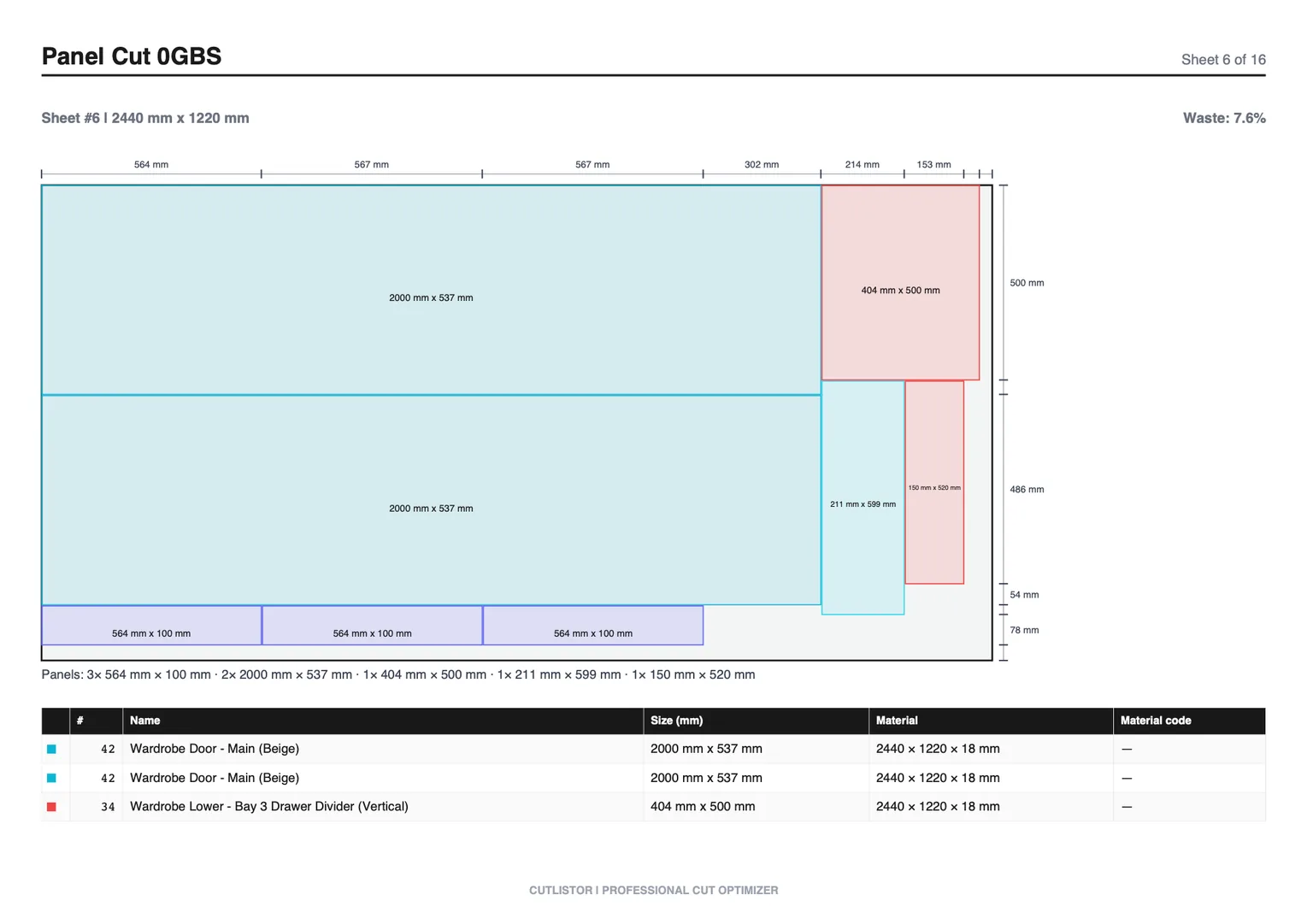
Matching grain across a run of doors or a tall pantry face looks premium and burns yield. Treat it as a priced option. Nest matched sets with locked orientation and accept lower usage percent on that material group.
Grain does not replace kerf
Orientation rules and kerf both belong in the nest. Locking grain on a zero-kerf layout still produces short parts. Set both before you trust sheet count.
Applying grain rules in Cutlistor
Read the free tier this way: iteration is free, delivery is budgeted. Editing parts and re-optimizing the sheet cost nothing and are unlimited, while PDF export and starting a fresh project draw on 3 per day. The row cap is 20 per list, spreadsheet import is 5 rows per file, and projects are not saved.
FAQ
Should cabinet door grain always run vertical?
Vertical is the common default for tall doors. Confirm with the designer for horizontals on wide drawers or specialty looks, then lock that choice in the nest.
Do solid white melamine parts need grain lock?
Usually no, unless a textured emboss has a visible direction. Free rotation on solid colors is a major yield lever.
How much usage percent should we lose to grain rules?
Often several points versus free rotation, sometimes a full sheet on mid-size kitchens. Measure with two nests on the same BOM rather than guessing.
Floor Practice That Protects Yield
Grain is a constraint the optimizer cannot infer on its own. Left unstated, it gets resolved at the saw by whoever is holding the sheet, and usually in favour of speed.
Apply grain lock only where it earns its cost. Visible gables, doors, and drawer fronts need it; hidden backs, nailers, and shelf blanks do not, and letting those rotate is often worth a full sheet.
Note grain direction on stored offcuts alongside the size. A remnant with unknown grain gets used for a hidden part at best, which throws away most of its value.
Put the grain-lock rules in the shop standard so visible parts never ride on the sawyer's judgment call.
- Kerf from a test cut on the same material family
- Grain lock on doors, gables, and show shelves
- Trim allowances decided before nesting, not at the saw
- Offcut shelf with minimum size rules your shop respects
Conclusion
Grain direction changes cabinet material usage whenever you trade packing freedom for appearance. Lock show faces, free the hidden parts, and put the sheet delta on the quote when clients ask for continuous match.