
Article
How Rising Plywood Prices Affect Cabinet Shops
Cutlistor Team4 min read
Introduction
When plywood prices rise, cabinet shops feel it first in quotes that were fixed too early and in kitchens that were estimated with last quarter’s sheet count. Material is not the only cost, but it is one of the fastest ways a healthy job turns thin.
This article is for owners and estimators: what breaks in the workflow, which levers still work (yield, hybrids, remnants, bid validity), and how to talk to clients without inventing panic. Price levels vary by region; treat any dollar examples as planning context, not forecasts.
Where Price Spikes Hit the Shop
| Shop area | What breaks | First response |
|---|---|---|
| Estimating | Stale sheet costs in templates | Refresh landed costs weekly/monthly |
| Purchasing | Quotes expire before PO | Short bid validity; re-nest before buy |
| Design / sales | Plywood doors added late | Re-price change orders with new nest |
| Floor | Substitutions without redraw | Material codes must match nest |
| Cash flow | Larger deposits needed | Align deposits with sheet POs |
Levers That Still Work When Sheets Get Expensive
You cannot control mill pricing. You can control sheet count, remnant reuse, and when you offer plywood vs melamine vs prefinished upgrades.
- Re-nest every substantial design change before locking the bid
- Offer melamine boxes with plywood upgrades as explicit options
- Keep MDF for paint doors so plywood is reserved for structural parts
- Standardize cabinet sizes to improve remnant reuse across jobs
- Track usable offcuts with dimensions on the rack
- Shorten quote validity when distributors warn of increases
Client Conversations Without Drama
Show options: plywood carcass upgrade, prefinished interiors, or production melamine. Tie each option to schedule and maintenance, not only to price. When a change order adds plywood pantry doors, bring a new sheet count, not a vague percentage bump.
Educate with process: “We nest every job before we buy sheets.” That positions professionalism instead of nickel-and-diming.
Hybrid Specs That Protect Margin
Common defensive hybrids during price spikes: melamine boxes with plywood sink bases and long shelves; plywood boxes with MDF paint doors; Baltic birch drawers only, not full Baltic carcasses. Write hybrids into the proposal so purchasing does not default to all-plywood.
Nesting Is the Anti-Spike Tool You Control
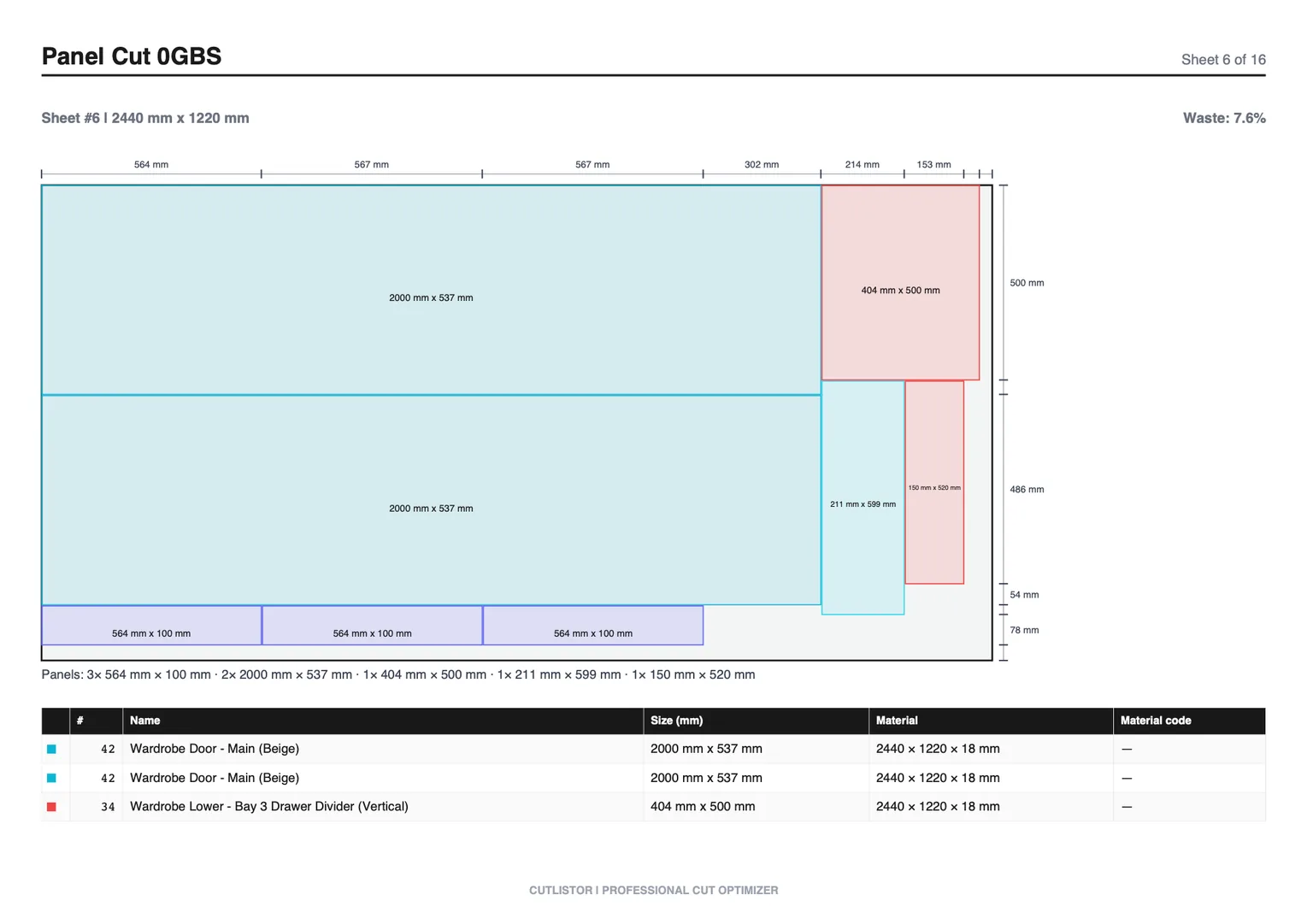
When sheet prices rise 10%, a nest that saves one sheet on a twenty-sheet job offsets a meaningful share of the increase. Cutlistor is a browser-based sheet and linear optimizer for rectangular cut lists and PDF plans. It is not a design suite and does not set market lumber prices.
The free tier draws its line at output, not at effort. Rearranging parts and re-running the nest as many times as you like costs nothing; the daily allowance of 3 is spent only when you export a PDF or open a new project. Sessions hold up to 20 part rows, CSV and XLSX files import up to 5 rows each, and closing the tab clears the work.
Pro is $12/mo for saved projects and DXF export.
FAQ
Should we switch everything to melamine when plywood rises?
Not blindly. Melamine fits production interiors; many custom clients still pay for plywood. Offer tiers and nest each tier so the price difference is real.
Should we stockpile sheets?
Only with cash, storage, and a remnant plan. Dead SKUs on the rack are expensive. Prefer standardized house materials that reuse across jobs.
Floor Practice That Protects Yield
When sheet prices climb, yield stops being a nice-to-have. Every point of waste is multiplied by a higher unit cost, and old quotes go underwater quietly.
When stock costs more, accurate kerf and grain settings convert straight into margin. Measure the blade, restrict grain lock to visible parts, and re-nest — that is free money at any sheet price.
Rising prices turn the remnant rack into a real asset. Label and inventory it, then check it first — a stored half-sheet is the cheapest sheet you will ever buy.
Put the re-quote cadence in writing so price moves get caught on a schedule instead of in the middle of a job.
- Kerf from a test cut on the same material family
- Grain lock on doors, gables, and show shelves
- Trim allowances decided before nesting, not at the saw
- Offcut shelf with minimum size rules your shop respects
Conclusion
Rising plywood prices punish stale quotes and loose nests. Refresh landed costs, shorten bid validity, offer honest hybrids, and re-nest before every PO so sheet count stays under your control.