
Article
How to Reduce Plywood Waste in Cabinet Making
Cutlistor Team3 min read
Introduction
Plywood waste in cabinet making is expensive veneer you never invoiced. It piles up as skinny rip strips, mis-oriented door blanks, and extra 4×8 sheets bought “just in case.” Reducing that waste is a purchasing and nesting discipline, not a hope that the scrap rack will somehow clear itself.
Use this checklist for carcass plywood, painted ply doors, and Baltic birch drawer packs.
Buy the sheet size you nest
Nesting on 4×8 while the job needs 5×5 Baltic birch for drawers guarantees wrong counts. Confirm SKU, thickness, and face grade before optimizing. Trim damaged mill edges out of the usable nest window if your process requires it.
Grain locks and kerf: the two silent waste drivers
Over-locking grain on hidden shelves leaves empty sheet regions. Ignoring kerf produces remakes that scrap whole blanks. Fix both before you blame the nest algorithm.
Worked example: plywood waste dollars
| Metric | Manual pad | Optimized | Delta |
|---|---|---|---|
| Sheets | 14 | 12 | −2 |
| Material | $1,372 | $1,176 | $196 saved |
| Approx. yield | 68% | 79% | +11 pts |
| Scrap handling | High | Lower | Fewer strips to sort |
Turn plywood offcuts into stock
Label usable remnants with species, thickness, face grade, and grain direction. Enter them as stock before buying new sheets for fillers and small shelves. Batch same-SKU jobs so awkward strips get a second chance the same week.
Floor habits that protect plywood
Follow the PDF nest instead of improvising rips. Support exit faces to reduce veneer tear-out remakes. Keep A-faces labeled so show panels are not sacrificed to a hidden shelf.
- Cut from the optimized plan; do not “improve” it mid-sheet without re-nesting
- Separate face grades in the rack
- Reject sheets with core voids in door blanks before you invest finishing time
- Return labeled remnants to inventory the same day
Cutlistor workflow to cut plywood waste
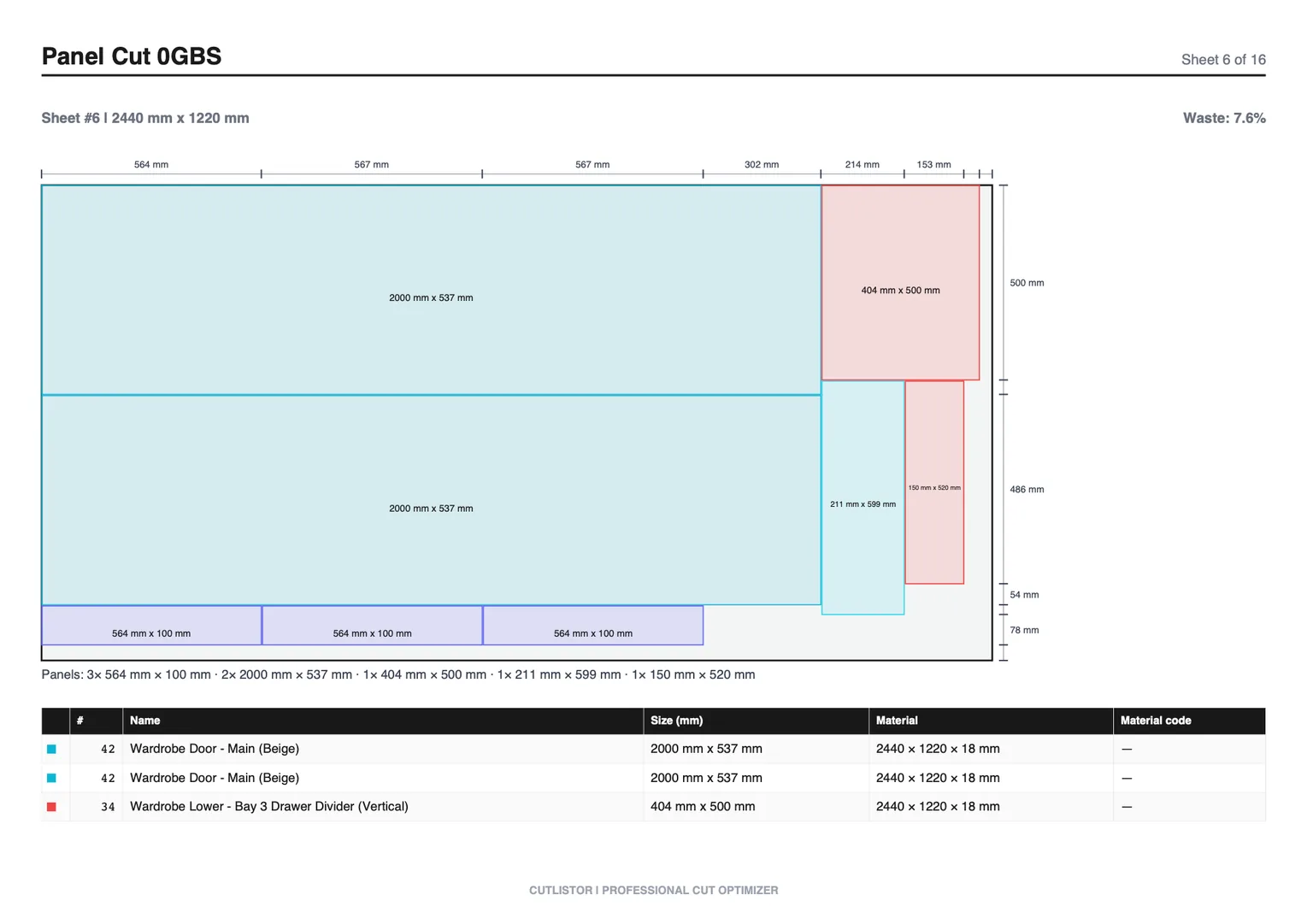
Free use is genuinely unmetered where it matters for cutting: change a dimension, re-nest, change it again, at no cost. The 3-per-day allowance covers PDF exports and new projects. Cut lists stop at 20 rows, imported CSV or XLSX files at 5 rows, and there is no persistence between visits.
FAQ
Should we nest shop-grade and A-face together?
Only if they are truly interchangeable for that part. Mixing grades to chase yield can create finish rejects that waste more than a clean nest saves.
Does using melamine interiors reduce plywood waste?
Hybrid designs can move volume to cheaper sheets, but each material still needs its own nest. Waste reduction on plywood comes from nesting plywood well, not from hiding a bad ply nest behind melamine.
What waste percent should we target?
Track yield, not only scrap weight. Many cabinet ply nests do well when waste (100 minus yield) sits in the high teens with selective grain lock. Compare month over month.
Floor Practice That Protects Yield
Waste in a cabinet shop is mostly structural rather than careless. It comes from nesting one job at a time, rounding kerf down, and remnants that never re-enter inventory.
Two settings recover most of the loss: a kerf value measured from the blade actually in the saw, and grain lock applied to visible parts only. Both are one-time inputs that pay out on every job afterwards.
Remnant handling is where most waste-reduction efforts quietly fail. Set a minimum keep size, label everything that clears it, and scrap the rest immediately rather than letting the rack decide.
Write the waste rules into the standard so yield gains outlive the one job that discovered them.
- Kerf from a test cut on the same material family
- Grain lock on doors, gables, and show shelves
- Trim allowances decided before nesting, not at the saw
- Offcut shelf with minimum size rules your shop respects
Conclusion
Reducing plywood waste in cabinet making means nest-before-buy, selective grain lock, measured kerf, and remnant discipline. Those habits protect veneer spend and keep quotes honest when plywood prices spike.