Article
Cabinet Material Thickness Guide: Boxes, Doors, Shelves & Backs
Cutlistor Team4 min read
Introduction
Thickness mistakes show up as loose cams, proud doors, sagging shelves, and hardware that will not seat. Cabinet shops need a written thickness standard per part family, then purchasing and nesting that match measured stock, not catalog labels alone.
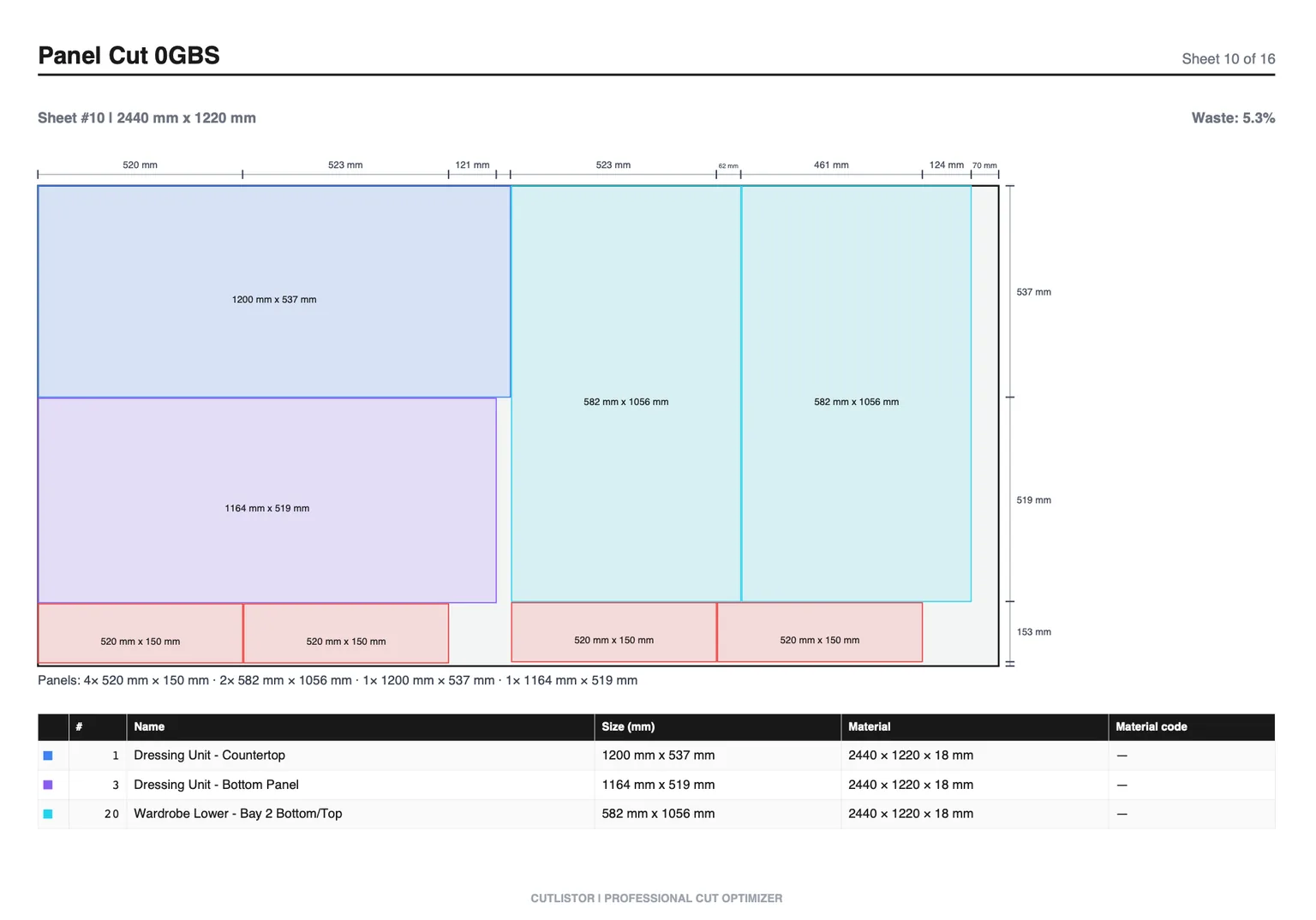
This guide lists common North American and metric thicknesses for commercial cabinetry, notes where undersize plywood bites, and ties thickness choices to yield and cost.
Carcass Thickness Standards
| Carcass part | Common imperial | Common metric | Notes |
|---|---|---|---|
| Sides / ends | 3/4 in | 18–19 mm | Confirm actual thickness |
| Bottoms / decks | 3/4 in | 18–19 mm | Match sides for cams |
| Fixed shelves | 3/4 in | 18–19 mm | Long spans: prefer plywood |
| Stretchers | 3/4 in | 18–19 mm | Same stock as sides often |
| Nailers / hanging rails | 3/4 in | 18–19 mm | Structural; don’t down-gauge casually |
Backs, Doors, and Drawer Thickness
| Part | Common thickness | Material note |
|---|---|---|
| Full back | 1/4 in or 1/2 in | Plywood or melamine; thicker = stiffer |
| Partial back / stretcher system | Varies | Follow your construction method |
| Paint doors (slab/shaker) | 3/4 in (sometimes 1 in) | Usually MDF |
| Plywood slab doors | 3/4 in | Grain lock in nest |
| Drawer sides | 1/2 in or 5/8 in | Baltic birch common |
| Drawer bottoms | 1/4 in or 1/2 in | Capture in dado or groove |
Shelves: Thickness vs Span
| Span (approx.) | Minimum shop practice | Better practice |
|---|---|---|
| Under 24 in | 3/4 in MDF or ply | 3/4 in plywood if heavy load |
| 24–36 in | 3/4 in plywood | Add mid support if open/heavy |
| Over 36 in open | Do not rely on thin stock | Support, thicker panel, or redesign |
Labeled vs Actual Thickness
Hardwood plywood sold as 3/4 in often measures closer to 23/32 in. Melamine and MDF can also vary by brand. Build a thickness log for house SKUs. Hardware (cams, drawer slides, hinge cups) assumes a thickness; wrong assumptions create proud or recessed fittings.
When importing a cut list, put the true thickness in the material name so nests and purchasing stay aligned.
Nest by Thickness Group
Never mix 1/2 in drawer stock and 3/4 in carcass stock in one nest. Separate optimizer runs (or stock rows) by thickness and material. Set kerf for the tool that will cut that group.
Cutlistor optimizes rectangular sheets and linear stock in the browser with PDF plans. It is not a cabinet design suite.
Free use is genuinely unmetered where it matters for cutting: change a dimension, re-nest, change it again, at no cost. The 3-per-day allowance covers PDF exports and new projects. Cut lists stop at 20 rows, imported CSV or XLSX files at 5 rows, and there is no persistence between visits.
Pro is $12/mo for saved projects and DXF export.
FAQ
Can I build kitchen boxes from 16 mm panels?
Yes if your hardware and design system support it. Many European and frameless systems do. Do not mix 16 mm and 19 mm parts in the same cam program without redesign.
Are 1 in doors worth it?
They can sell a premium feel on paint-grade work. They also change hinge geometry, weight, and sheet yield. Quote thickness as a design choice, not a surprise on install day.
Floor Practice That Protects Yield
Nominal thickness is close to a marketing number. Dados, rabbets, and drawer clearances are cut against the actual sheet, and the gap between the two is where fit problems begin.
Measure thickness and kerf in the same session, with calipers, off the actual pallet. A 3/4 in sheet at 18.2 mm and a blade at 3.4 mm are both small surprises that compound across a kitchen.
Write the measured thickness on every stored offcut. Sorting a rack by nominal size is what produces dados cut for 18 mm stock that turns out to be 17.5.
Record measured thicknesses per supplier so dado and groove setups start from fact rather than from the nominal label.
- Kerf from a test cut on the same material family
- Grain lock on doors, gables, and show shelves
- Trim allowances decided before nesting, not at the saw
- Offcut shelf with minimum size rules your shop respects
Conclusion
Cabinet material thickness is a shop standard: 3/4 in carcasses, appropriate backs, MDF doors, drawer sides that match joinery, and shelves sized for span. Measure real stock, nest by thickness, and keep hardware assumptions honest.