Article
How to Choose Kitchen Cabinets: Stock, Semi-Custom, Custom & Materials
Cutlistor Team4 min read
Introduction
Kitchen cabinets usually take 25–40% of a remodel budget. Choosing them poorly locks you into the wrong construction, lead time, and material spend before counters or appliances ever show up. The decision is not just “looks I like” — it is stock vs semi-custom vs custom, face-frame vs frameless, door style, and whether boxes are factory-built or shop-built from a cut list.
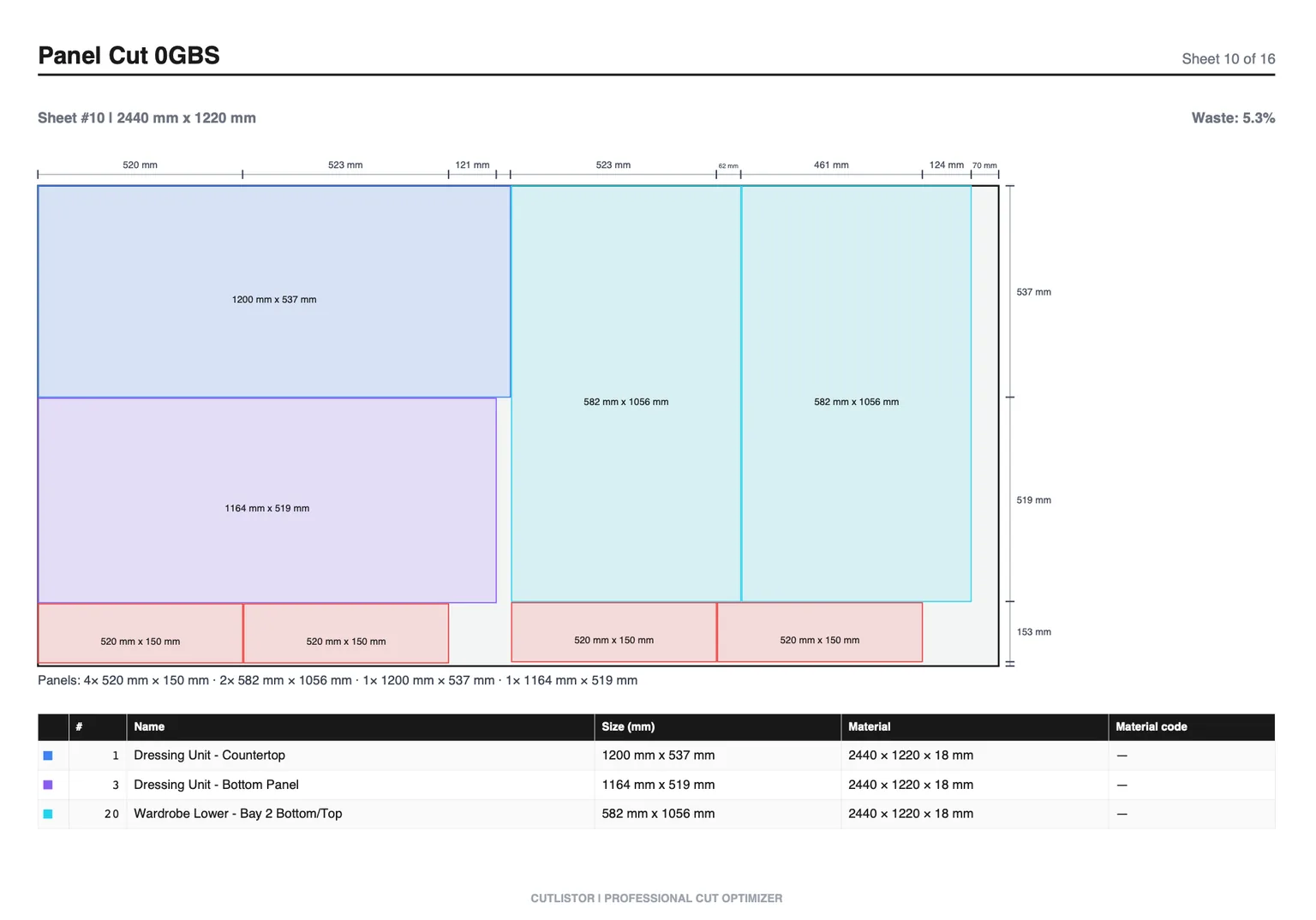
This guide is for homeowners and contractors planning a 2026 kitchen renovation. It covers the buying paths, construction systems, materials, and the point where custom or shop-built work needs a real cut list and sheet count — not a catalog sketch.
Stock, semi-custom, custom, and RTA
| Path | Typical installed range (USD / LF)* | Lead time (typical) | Best when |
|---|---|---|---|
| Stock / RTA | ~$100–$300 | Days–weeks | Tight budget, standard sizes fit |
| Semi-custom | ~$150–$700 | 4–12 weeks | Modifications needed, mid finishes |
| Custom / shop-built | ~$500–$1,500+ | 8–20+ weeks | Odd walls, premium materials, exact fit |
*Installed LF ranges are national planning bands for 2026. Materials-only and DIY numbers are lower; high-end metros run higher. See the full cost breakdown for what drives each band.
Decision framework: which path fits
| Question | If yes… | Lean toward |
|---|---|---|
| Walls close to standard widths with few obstacles? | Catalog sizes fit with small fillers | Stock / RTA |
| Need specific depths, finishes, or soft-close everywhere? | Factory options cover most needs | Semi-custom |
| Out-of-square walls, beams, or unique layout? | Every elevation is a one-off | Custom / shop-built |
| Budget under ~25% of remodel for cabinets? | Prioritize function over customization | Stock or entry semi-custom |
| You or a shop will cut boxes from sheet goods? | You own the BOM and nest | Shop-built + cut list |
Face-frame vs frameless
Construction system changes storage access, hardware, and how boxes look when doors open. It also changes the cut list: face-frame shops add linear stile/rail stock; frameless shops edge-band more panel edges and often use 32 mm boring.
- Face-frame: traditional North American look; frame hides box edges; inset or overlay doors.
- Frameless (full-access / European): more clear opening; full-overlay doors common; clean modern lines.
- Mixed kitchens exist (frameless boxes with applied frames) — freeze the system before ordering hardware.
Door styles that still matter in 2026
| Style | Common materials | Planning note |
|---|---|---|
| Shaker / recessed panel | Maple, MDF, painted plywood | Still the volume default; easy to service |
| Slab / flat | Veneer, laminate, painted MDF | Modern; grain matching matters on wood |
| Raised panel | Solid wood or MDF | Heavier; more milling; longer lead times |
| Glass / mullion | Frame + glass insert | Budget glass and lighting separately |
| Louvered / specialty | Solid or MDF | Often custom-only; confirm moisture use |
Materials: boxes, doors, and finishes
Separate the box material decision from the door material decision. Many kitchens run melamine or plywood carcasses with painted MDF or hardwood doors. Sticker price per sheet is not the job cost — yield and waste are.
- Plywood boxes: strong screw holding, good for custom; grade and face species drive cost.
- Melamine / TFL: fast production interiors; budget banding and chip repair.
- MDF doors: paint-grade favorite; watch moisture and weight on tall doors.
- Particle core: common under laminate; not a substitute for structural plywood shelves when span is long.
When custom or shop-built means a cut list
Stock and semi-custom factories own the nest. Custom and shop-built kitchens put the BOM on you or your cabinet maker. That is where inaccurate sheet guesses and ignored kerf turn into rush freight or leftover stacks.
Path: freeze elevations → list every box part → nest by material SKU → buy the nested sheet count → cut and label. Homeowners comparing shop-built quotes should ask for a cut list and sheet count, not just a LF price.
FAQ
Are RTA cabinets “real” cabinets? Yes — many are the same box construction as assembled stock, shipped flat. Quality varies by brand; check box thickness, hinge brand, and drawer slide specs.
Is frameless always more expensive? Not inherently. Hardware and finish level dominate. Frameless can cost less in a production shop and more when every panel needs premium banding and perfect reveals.
Should I refinish old cabinets instead? Refacing or painting can fit a cosmetic refresh budget. If layout, storage, or box integrity is wrong, new cabinets — stock through custom — usually win over another coat of paint.
When should I involve a cabinet shop early? As soon as layout and appliances are roughly set. Measuring and elevations before demolition prevent ordering the wrong path.
Next steps
Price the path with local quotes, measure the room accurately, then decide stock vs custom. If you are shop-building or buying custom casework, move from elevations to a nested cut list before purchasing sheets.