Article
How to Reduce Cabinet Material Costs Without Cheapening the Job
Cutlistor Team3 min read
Introduction
Reducing cabinet material cost is not the same as switching to the cheapest sheet. The shops that protect margin improve yield, standardize SKUs, choose hybrids on purpose, and stop buying “one extra sheet” because the estimate was fuzzy.
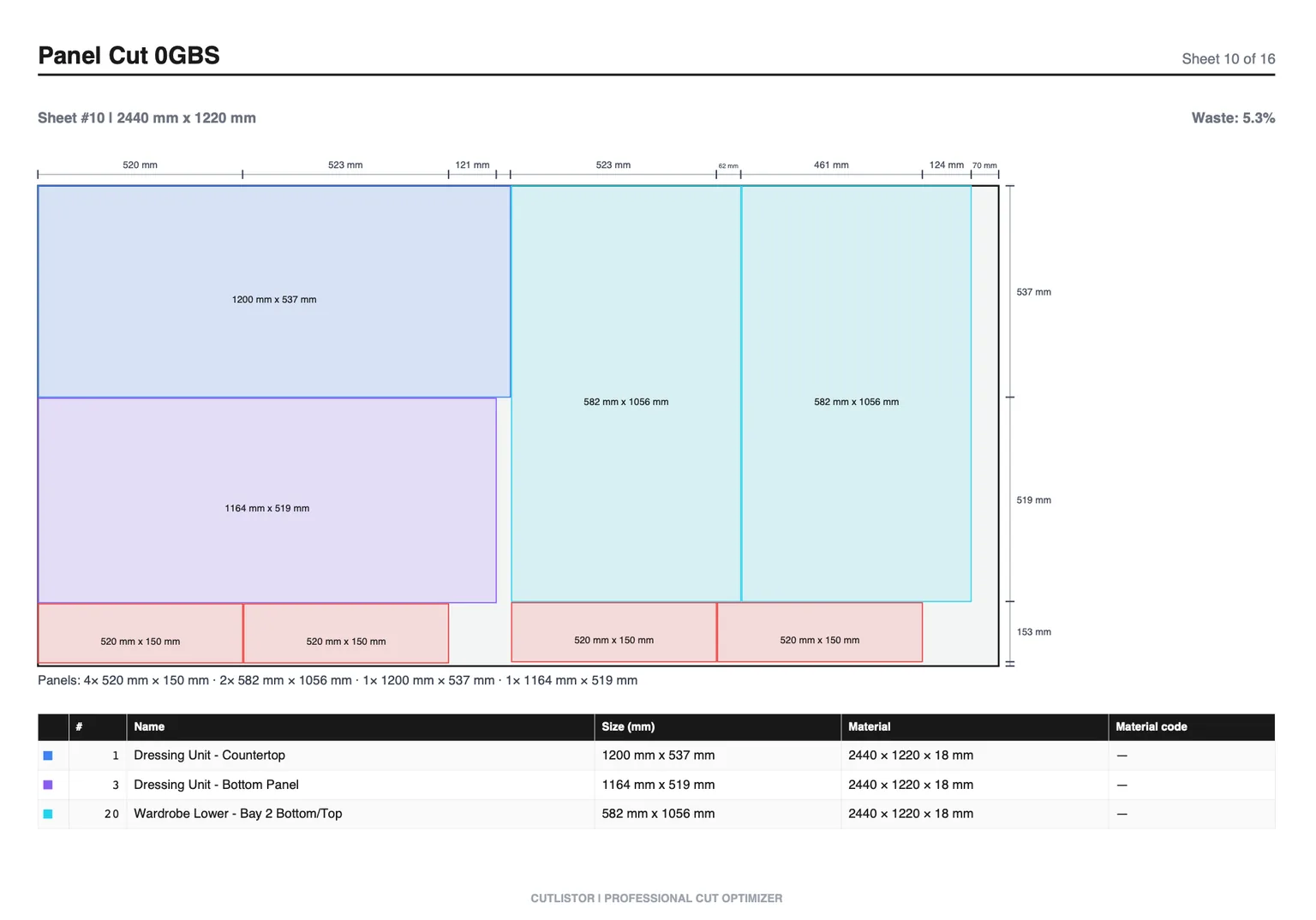
Use this as a shop checklist. Pair it with current distributor pricing (approximate 2026 ranges live in our cost guide) and with a real nest before every PO.
1. Nest First, Buy Second
Every cost conversation starts with sheet count. Enter all parts by material and thickness, set kerf, lock grain where it matters, and compare layout methods your floor can actually cut. Saving one sheet on a mid-size kitchen often beats a small unit-price discount.
2. Standardize Sizes and House SKUs
Too many species and thicknesses create orphan remnants. Pick house plywood, house melamine colors, house MDF for paint doors, and house Baltic birch for drawers. Standard cabinet depths and heights make nests repeatable across jobs.
3. Use Hybrids on Purpose
| Hybrid | Saves | Watch-out |
|---|---|---|
| Melamine boxes + MDF paint doors | Plywood volume + finishing | Edge quality on melamine |
| Plywood boxes + MDF doors | Door substrate cost vs ply slabs | Keep nests separate |
| Melamine + plywood long shelves | Shelf callbacks | Label parts clearly |
| Prefinished ply interiors | Spray labor | Lot matching and banding |
4. Run a Remnant System
Label offcuts with material, thickness, and dimensions. Check remnants before buying a new sheet for small parts: cleats, nailers, drawer dividers, filler blanks. Unlabeled scrap is a tax on every kitchen.
5. Tighten Purchasing Habits
- Refresh landed costs when distributors announce changes
- Buy full units that match the nest, not round numbers from habit
- Avoid mixing dye lots on visible prefinished or clear runs
- Confirm actual thickness so you do not scrap mis-machined parts
- Keep bid validity short during volatile plywood markets
6. Use the Right Tool for Cut Lists
Spreadsheets miss kerf and packing. Full design suites are overkill when you only need sheet count and a PDF for the saw. Cutlistor is a sheet and linear optimizer in the browser for rectangular nesting and shop plans. It is not a cabinet design suite.
The free tier's limits sit around the edges of the work rather than in the middle of it. Editing and re-optimizing are unlimited; PDF exports and new projects share a daily budget of 3. A single session carries up to 20 part rows, each CSV or XLSX import up to 5 rows, and nothing is stored after you close it.
Pro is $12/mo for saved projects, higher imports, and DXF export for CNC handoff.
Weekly Cost Checklist
- Update sheet prices in your estimate template
- Review last week’s nests: where did an extra sheet appear?
- Return usable remnants to labeled racks
- Confirm house SKUs still match what sales is promising
- Re-nest any open bids older than your price validity window
FAQ
Is buying a cheaper plywood grade the best savings?
Sometimes, if performance still meets the job. Often a better nest on the right grade saves more than a downgrade that risks voids, telegraphing, or callbacks.
Does outsourcing doors reduce material cost?
It can reduce in-house sheet purchases and finishing, but you still need accurate box nests. Compare total package cost, not only sheet goods.
Conclusion
Cut cabinet material cost with nesting, standards, intentional hybrids, and remnant discipline. Re-price sheets when markets move, and treat sheet count as a controllable number, not a surprise at the distributor counter.