Article
Melamine vs Plywood Cabinets: Production Boxes, Edges & Quoting
Cutlistor Team4 min read
Introduction
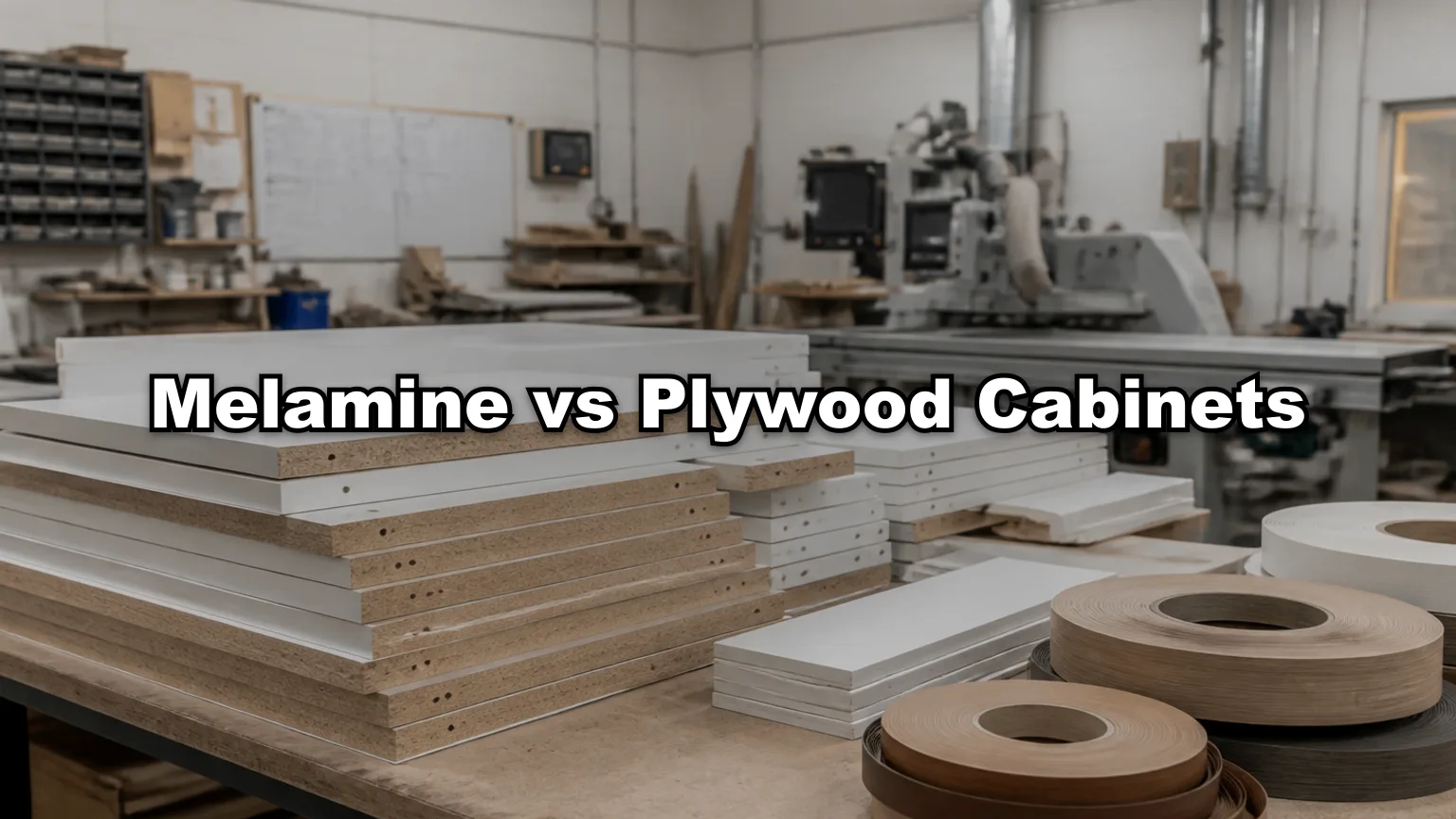
Melamine and plywood are the two carcass languages of modern cabinet shops. Melamine (thermally fused laminate over particle or MDF core) ships prefinished and ready for edgebanding. Cabinet plywood ships stronger per thickness, takes more finish options, and usually costs more per sheet.
This guide is for estimators and shop owners quoting production kitchens, closets, and custom boxes. It focuses on purchasing, edge work, hardware, yield on common panel sizes, and approximate 2026 cost bands. Regional pricing varies; always confirm with your distributor before a fixed bid.
What Shops Mean by Melamine vs Plywood
| Attribute | Melamine (TFL) | Cabinet plywood |
|---|---|---|
| Face | Laminate, wipe-clean | Veneer; finish in shop or prefinished |
| Core | Usually particle; some MDF | Veneer, combination, or lumber core |
| Edge work | PVC/ABS banding standard | Banding, solid edge, or hardwood trim |
| Screw holding | Adequate with correct fasteners | Generally stronger |
| Repairability | Chips hard to hide | Easier touch-up on unfinished stock |
| Production speed | Very fast | More finish steps unless prefinished |
When Melamine Wins the Job
Production kitchens, rental turnovers, closets, laundry, and garage packages often win on melamine because face finishing is already done. Consistent white or woodgrain interiors photograph well and wipe clean for end users.
The commercial risks are edge chips, weak screw repair if hardware moves, and moisture at sink bases if edges are poorly sealed. Spec confirmat or system screws, quality banding, and sealed cutouts around plumbing.
- High volume, repeat SKUs, standard colors
- Clients who prioritize wipe-clean interiors over wood feel
- Shops with edgebanders and panel saws already dialed for TFL
- Closet and pantry packages where cost per linear foot dominates
When Plywood Wins the Job
Custom kitchens with painted or stained interiors, heavy drawer hardware, long shelves, and wet-prone sink bases lean plywood. Architects and designers often specify plywood carcasses even when doors are paint-grade MDF.
Plywood also wins when the shop sells a wood-interior aesthetic or when the job will be site-finished. Prefinished plywood is the middle path when you want speed without particle core.
Approximate 2026 Cost and Labor Tradeoffs
| Cost factor | Melamine | Plywood | Estimator tip |
|---|---|---|---|
| Sheet price (approx. 3/4 in)* | $45–$95 | $70–$180 | Wide regional spread |
| Face finishing labor | Near zero | Prime/paint/clear or buy prefinished | Price labor or buy UV ply |
| Edgebanding | Required, visible | Required or solid edge | Include banding scrap |
| Hardware rework risk | Higher if overdriven | Lower | Train install crew |
| Yield sensitivity | High on large doors | High when grain locked | Nest before PO |
*Approximate mid-2026 shop planning bands for common North American panels. Not a Cutlistor price and not a bid. Confirm locally.
Cut Lists: Keep Melamine and Plywood in Separate Nests
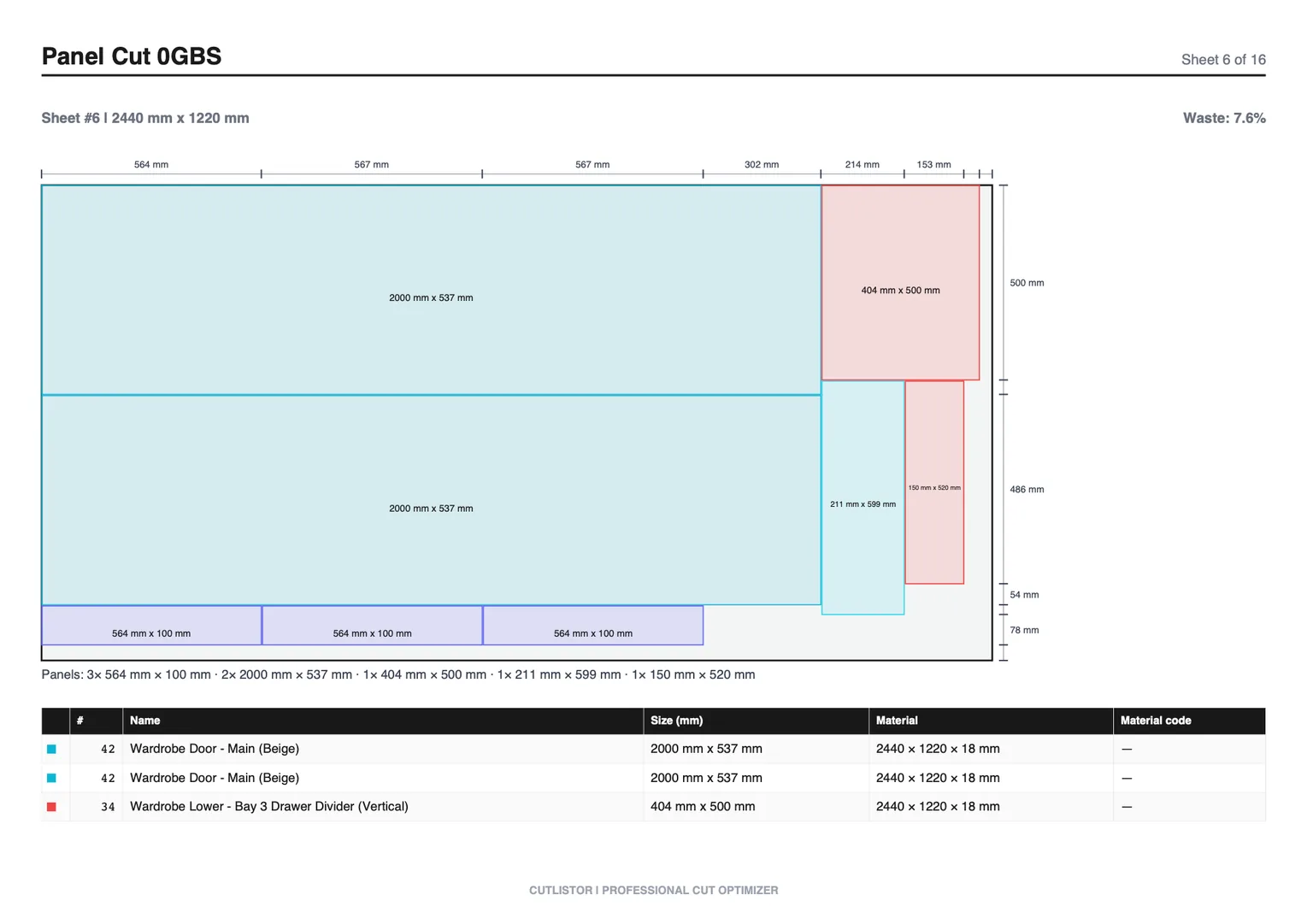
Never blend white melamine and birch plywood into one “sheet count.” Use separate stock rows, separate kerf if tooling differs, and lock grain on woodgrain melamine doors and on plywood show faces.
Cutlistor optimizes rectangular sheet nests and linear stock in the browser. It is not a full kitchen design suite. Estimators use it to get sheet counts and PDF layouts before purchasing.
Cutlistor's free tier meters something different: editing parts and re-optimizing the layout are unlimited, and only PDF export and starting a new project count against a daily allowance of 3. Cut lists are capped at 20 rows, CSV and XLSX import is limited to 5 rows per file, and nothing is saved between sessions.
Pro is $12/mo for saved projects, higher imports, and DXF when you hand rectangles to CNC.
Hybrid Specs That Sell
Common commercial hybrids: melamine boxes with plywood shelves in wet zones; plywood boxes with melamine closet interiors; plywood or melamine boxes with MDF paint doors; prefinished plywood boxes with painted MDF doors.
Write the hybrid into the proposal so purchasing and the floor do not default to one material for everything.
FAQ
Is melamine the same as particle board?
Melamine cabinets usually mean laminate-faced particle (or MDF) core. Raw particle board without faces is a different, weaker product for show cabinets. See MDF vs particle board for cabinets for core behavior.
Which is better under a sink?
Sealed plywood or carefully edged melamine with protected cutouts. Avoid raw MDF or unsealed particle edges near plumbing. Spec the sink base explicitly on the cut list.
Conclusion
Melamine wins production speed and wipe-clean interiors. Plywood wins strength, finish flexibility, and many custom specs. Quote hybrids when they protect margin, nest each SKU separately, and re-price sheets before you commit.