Article
How Many Sheets Does a Kitchen Need?
Cutlistor Team3 min read
Introduction
The first question on most kitchen quotes is not hinge brand. It is how many sheets. Overbuy and you park inventory that never hits the invoice. Underbuy and you pay rush freight mid-install. The honest answer comes from a nested cut list, not a rule-of-thumb per linear foot of cabinets.
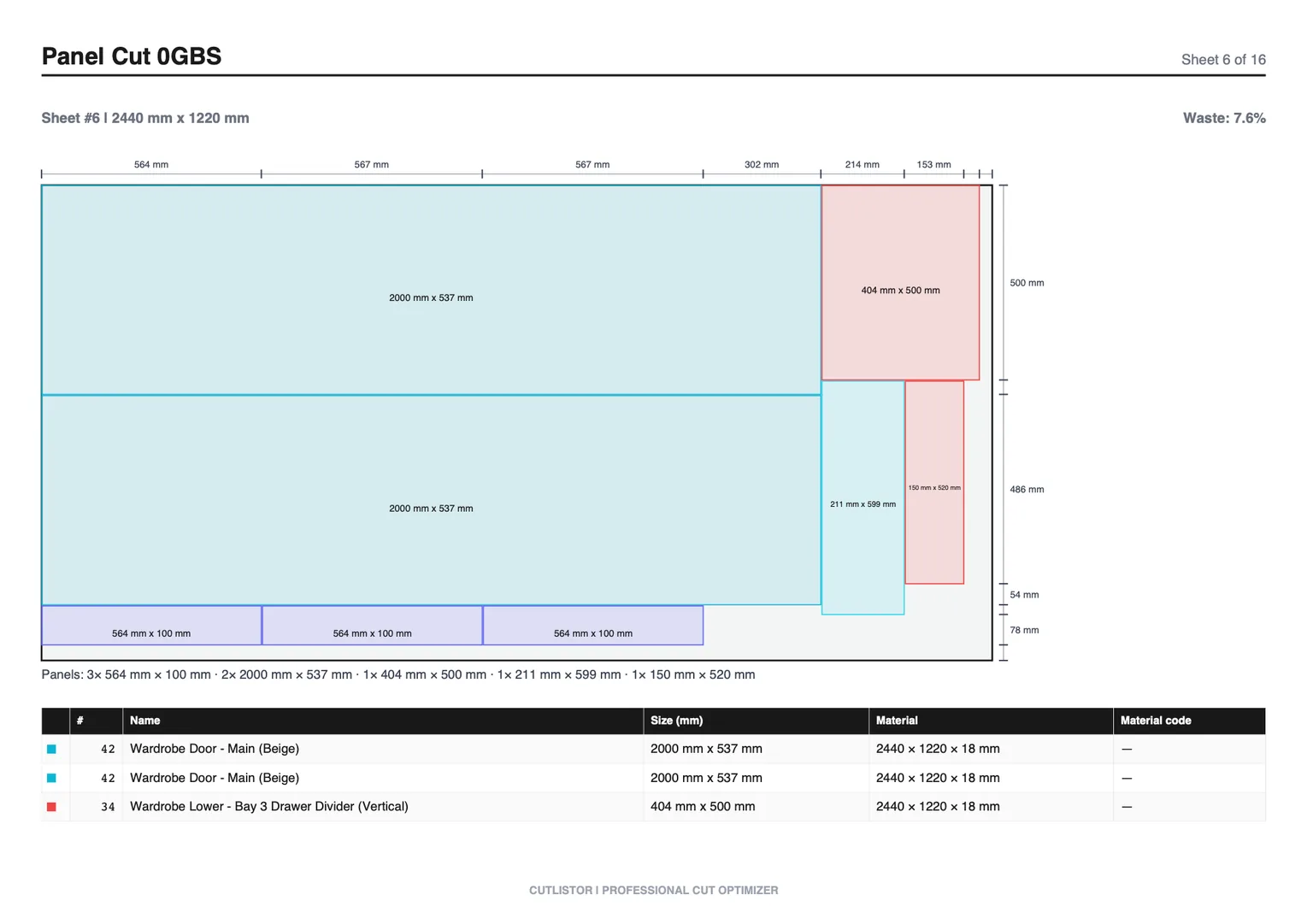
Use this guide for ballpark ranges, then replace the guess with a nest on the kitchen cabinet cut list calculator or free sheet optimizer before you send the PO.
What drives kitchen sheet count
Sheet count depends on box count, heights, material SKU, door style, and whether backs are sheet goods or thin hardboard. Two kitchens with the same footprint can differ by several sheets if one uses tall pantries and grain-matched doors.
- Carcass material and thickness (often 16 or 18 mm melamine or plywood)
- Door and drawer front material (sometimes a second SKU)
- Stock sheet size (2440×1220 vs 2750×1830 vs metric production sizes)
- Grain rules on doors and exposed ends
- Backs, fillers, toe skins, and pantry packs
Ballpark ranges (before you nest)
| Kitchen size (typical) | Rough carcass sheets (18 mm) | Doors/fronts (if separate) | Notes |
|---|---|---|---|
| Galley / small condo | 6 to 10 | 3 to 6 | Few tall units |
| Average family kitchen | 10 to 16 | 5 to 10 | Common mid-range pack |
| Large kitchen + pantry | 16 to 24+ | 8 to 14 | Tall units and islands add fast |
| Island-only add-on | 2 to 5 | 1 to 3 | Nest with main run when same material |
If your shop pads every quote with an extra 15% sheets without nesting, you are often buying one to three sheets the nest would have avoided on mid-size work.
Worked example: mid-size melamine kitchen
| Method | Carcass sheets | Yield (approx.) | Material at $88/sheet |
|---|---|---|---|
| Area formula × 1.20 pad | 15 | ~70% | $1,320 |
| Manual whiteboard layout | 14 | ~73% | $1,232 |
| Optimized nest, grain free on shelves | 12 | ~82% | $1,056 |
Three sheets versus the padded formula is $264 on this example alone. Multiply by weekly kitchen volume and sheet count becomes a profit lever, not a clerical detail.
Count each material separately
Carcass melamine, plywood gables, MDF doors, and hardboard backs are different sheet counts. Never merge them into one kitchen total for purchasing. Nest each material on its own stock SKU, then sum the POs.
How to get an exact sheet count
No account is needed to try it, and the free tier does not count the optimizing itself — parts can be edited and re-nested indefinitely. It counts finished PDFs and new projects, at 3 a day. Lists are limited to 20 rows, CSV and XLSX uploads to 5 rows per file, and work does not survive the session.
Quoting tip: show sheet count as a line
When clients ask why material jumped, show nest-backed sheet counts by material. That conversation is easier than defending a vague contingency percentage. Pair it with yield if you educate trade customers on cost drivers.
FAQ
Can I estimate sheets from linear feet of cabinets?
Only for rough sales talk. Linear feet ignores heights, pantries, door SKUs, and sheet size. Nest before you buy or bid firm.
Do doors count in the same sheet total?
Only if they share the same material and thickness as the carcass. Most shops run doors as a second nest, especially paint-grade MDF or grain-matched plywood.
Should I order an extra sheet for safety?
Prefer nesting with measured kerf and a small, labeled remnant plan over a blind extra sheet. If the job is remote and freight is expensive, one contingency sheet can make sense after the nest, not instead of it.
Conclusion
How many sheets a kitchen needs is a nesting question. Use ranges for early talks, then lock the PO to an optimized cut list by material. That habit protects margin and keeps installs from stalling on a missing sheet.