Article
How Much Does Cabinet Material Cost? 2026 Shop Planning Ranges
Cutlistor Team4 min read
Introduction
Cabinet material cost is sheet goods plus banding, plus the invisible premium of bad yield. Shops that quote from last year’s sheet price without a fresh nest get surprised when plywood markets move or when grain-locked doors add two sheets.
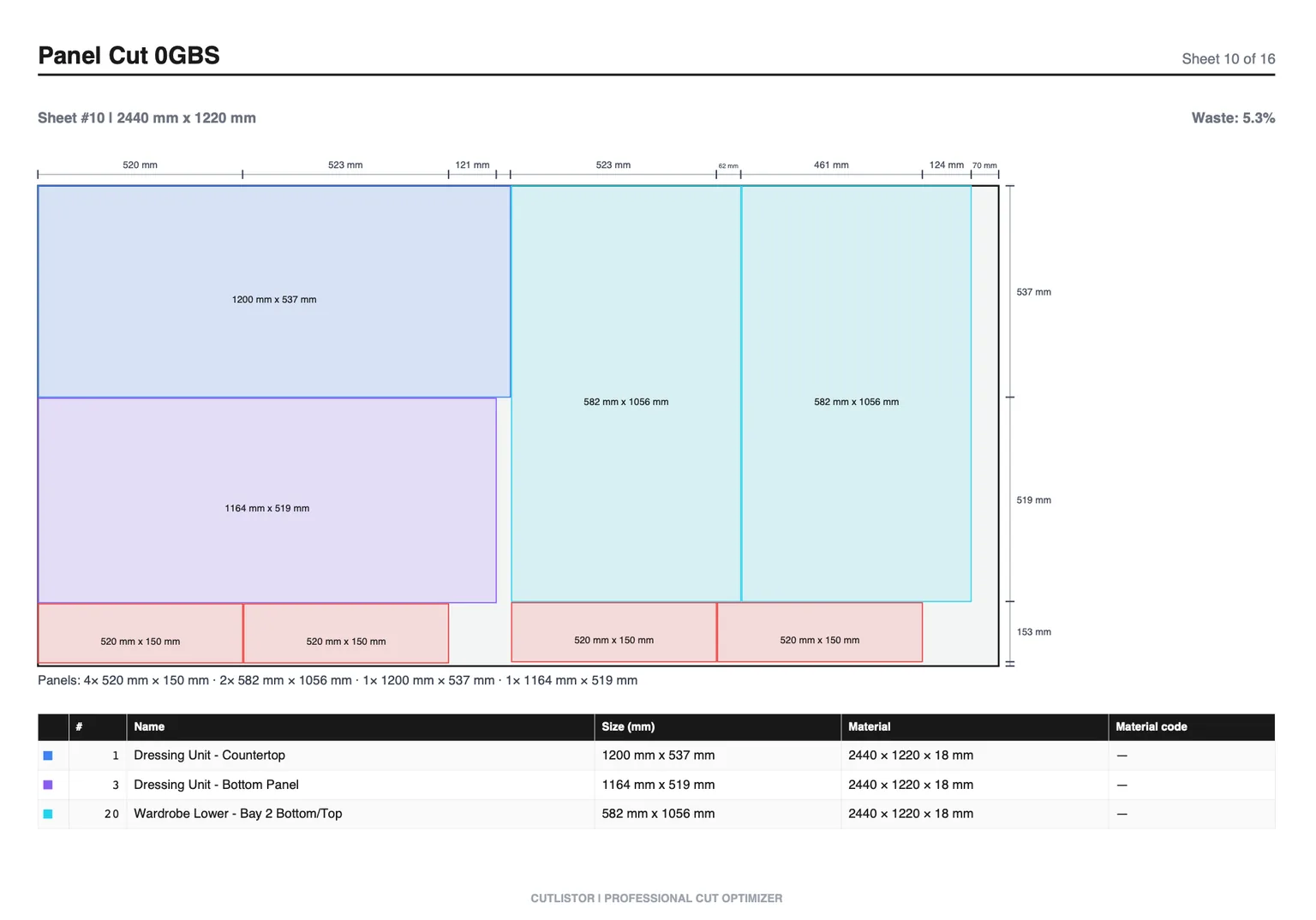
Below are approximate mid-2026 North American planning ranges for common cabinet sheets. They are not supplier quotes, not regional guarantees, and not Cutlistor product pricing. Always confirm with your distributor before a fixed bid.
Approximate 2026 Sheet Price Bands
| Material (typical 4×8, ~3/4 in) | Approx. shop range (USD)* | Cabinet role |
|---|---|---|
| Paint-grade MDF | $35–$70 | Doors, panels |
| Melamine / TFL particle panel | $45–$95 | Production boxes |
| Cabinet birch/maple plywood | $70–$140 | Custom boxes, shelves |
| Prefinished maple/birch plywood | $90–$180 | Fast wood interiors |
| Shop / utility plywood | $45–$90 | Utility only |
| Baltic birch (by size/thickness) | Often higher $/ft² | Drawers, specialty |
*Approximate mid-2026 planning bands. Coastal metros, specialty cores, and small-quantity buys run higher. Metric panel pricing differs.
From Sheet Price to Job Material Total
| Example scenario | Sheets (illustrative) | Material math focus |
|---|---|---|
| Small melamine closet run | 4–8 melamine | Banding + sheet count |
| Custom plywood kitchen boxes | 12–25 plywood | Grain lock + prefinished premium |
| Paint doors only (outsourced boxes) | 6–15 MDF | Door blank yield |
| Hybrid kitchen | Split SKUs | Report cost per material code |
Yield Is a Pricing Tool
A 10% yield gain on a $120 sheet job with 20 sheets is real margin. When markets rise, yield and remnant reuse often beat hunting a slightly cheaper grade that causes callbacks.
Compare material options with the same part list nested each way: melamine boxes vs plywood boxes, MDF doors vs plywood doors. Let sheet count decide, not habit.
Price the Nest, Not the Guess
Run the cut list, multiply sheets by your landed cost, and attach the PDF to the quote file. Cutlistor provides sheet and linear optimizers in the browser. It is not a design suite and does not set material market prices.
Cutlistor's free tier meters something different: editing parts and re-optimizing the layout are unlimited, and only PDF export and starting a new project count against a daily allowance of 3. Cut lists are capped at 20 rows, CSV and XLSX import is limited to 5 rows per file, and nothing is saved between sessions.
Pro is $12/mo for saved projects and DXF export.
FAQ
What percent of a cabinet job is sheet material?
It varies widely by finish level and hardware. Custom painted kitchens can see materials as a smaller share than production melamine packages. Track it in your own job costing rather than using a universal percent.
Should I show clients sheet prices?
Usually show package pricing. Internally, keep sheet counts and landed costs so you can explain change orders when the client adds plywood doors or an island.
Floor Practice That Protects Yield
Material cost is easy to quote and hard to predict, because the figure that matters is cost per finished cabinet after waste, not the price printed on the invoice.
Cost per cabinet turns on two inputs shops rarely measure: true kerf and true grain constraints. Guessing either inflates the sheet count you end up quoting against.
Remnants only reduce cost if they are findable. Label size and material, keep them in one place, and check the rack before every purchase order goes out.
Write the costing assumptions down and date them, so a stale sheet price does not quietly sink a bid months later.
- Kerf from a test cut on the same material family
- Grain lock on doors, gables, and show shelves
- Trim allowances decided before nesting, not at the saw
- Offcut shelf with minimum size rules your shop respects
Conclusion
Cabinet material cost is landed sheet price times nested sheet count, plus banding and handling losses. Use 2026 ranges only to plan, re-price from your distributor, and nest before you commit.