Article
How to Calculate Cabinet Material Yield
Cutlistor Team3 min read
Introduction
Cabinet material yield is the share of purchased sheet goods that becomes billable parts. The rest is kerf, trim, and remnants you cannot reuse on the next job. Yield is how estimators compare layouts, defend sheet POs, and stop padding every kitchen with mystery contingency sheets.
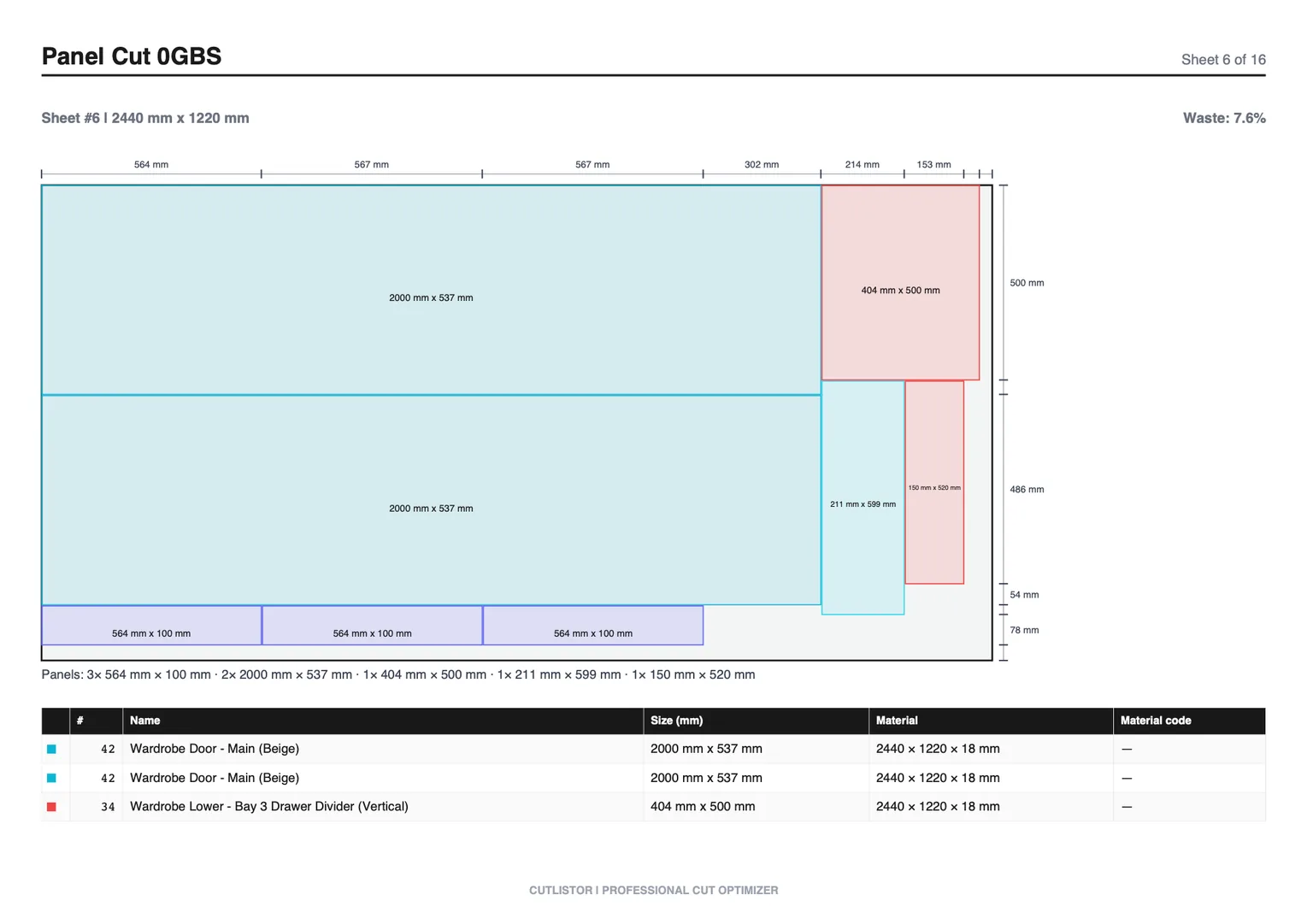
For the general definition across sheet and bar stock, see material yield explained. This article applies the same math to cabinet casework, doors, and shop quoting.
Cabinet yield formula
Sheet yield percent = (sum of finished part areas ÷ total area of sheets opened) × 100. Count every sheet you pull from the rack for that material group, including the one that only held a few fillers.
- Part area: use finished blank width × height × quantity
- Sheet area: supplier length × width × sheets consumed
- Do not mix melamine, plywood, and MDF into one yield number
- Report yield per material group on the quote when clients are trade buyers
Waste components on cabinet jobs
| Component | Cabinet example | Lever |
|---|---|---|
| Kerf | 3.2 mm between every melamine rip | Measure; enter in optimizer |
| Layout remnant | 600 × 200 mm strip after door pack | Batch jobs; remnant stock |
| Grain lock empty space | Vertical-only door blanks | Lock show faces only |
| Wrong SKU | Nested 4×8, bought 2750×1830 | Match stock size |
| Remakes | Chip-out or wrong size | Process and BOM QC |
Worked example: kitchen melamine yield
| Item | Calculation | Value |
|---|---|---|
| One sheet area | 2.75 × 1.83 m | 5.0325 m² |
| Twelve sheets | 12 × 5.0325 | 60.39 m² |
| Sum of part areas (example) | From BOM | 49.5 m² |
| Yield | 49.5 ÷ 60.39 × 100 | 82.0% |
| Waste share | 100 − 82 | 18.0% |
Manual pad that bought 14 sheets for the same parts would show yield of 49.5 ÷ (14 × 5.0325) ≈ 70%. Same cabinets, worse purchasing. Yield exposes the pad.
Track doors and carcass separately
Door packs often land at different yields than carcasses because of grain locks. Keep two yield lines on the job folder. Blending them hides whether the door upgrade is what hurt material usage.
Using yield in quotes and POs
Put nested sheet count on the PO. Put yield on internal job costing. For trade clients, showing yield improvements after you switch to optimized nests builds trust and supports firmer material pricing.
Reading yield in Cutlistor
The distinction that matters on the free plan is between reworking a layout and shipping one. Rework is unlimited. Shipping — a PDF export, or opening a new project — comes out of 3 per day. Alongside that sit a 20-row list cap, a 5-row limit per CSV or XLSX import, and no saved state.
FAQ
What is a good cabinet yield percent?
Many melamine carcass runs land in the high 70s to mid 80s when grain is only locked on show faces. Door packs vary more. Beat your own monthly average before chasing a universal number.
Should kerf area be subtracted from part area?
Yield uses finished part areas over sheet area consumed. Kerf is already “missing” from parts; it shows up as lower yield automatically when more sheets are needed.
Do reusable remnants improve yield?
On the job that created them, remnants still count as unused sheet area. On the next job, entering remnants as stock improves that job’s purchased-sheet yield. Track both views for honest costing.
Conclusion
Calculating cabinet material yield is simple math on honest inputs: part areas, sheets opened, one material at a time. Pair it with optimized nests and your sheet POs start matching the floor instead of a pad factor.