Article
Baltic Birch Plywood Guide: Grades, Sizes & Cut Lists
Cutlistor Team4 min read
Introduction
Baltic birch is the plywood furniture makers reach for when edges will show, drawers need strength, and voids are not acceptable. It is denser and usually pricier than construction plywood, so every wasted strip hurts. This guide covers what “Baltic birch” means, common grades and sizes, how to cut it cleanly, and how to plan a cut list before you buy.
What is Baltic birch plywood?
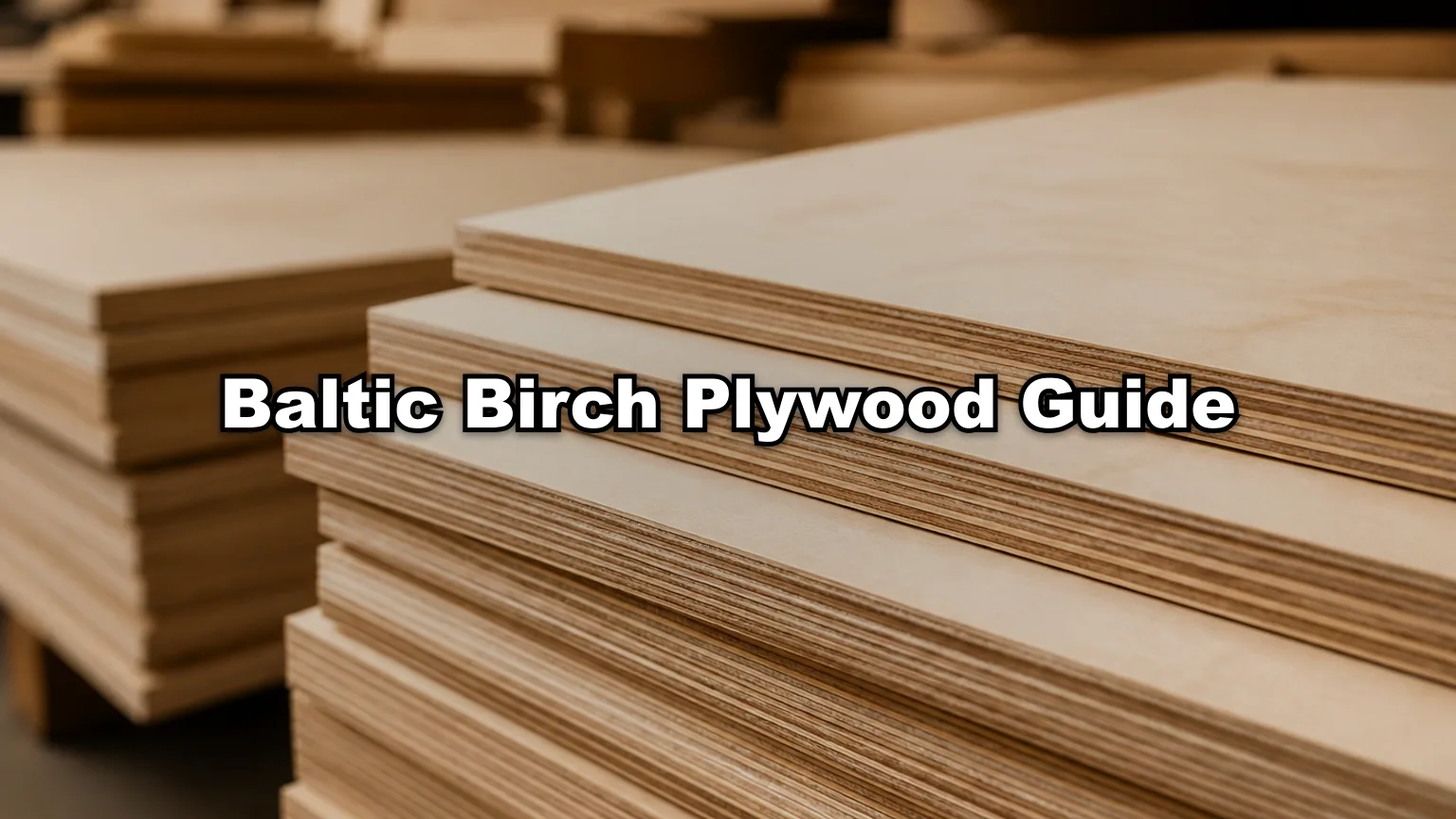
True Baltic birch (often from the Baltic region / northern Europe) uses birch veneers throughout — not a softwood core with a birch face. Plies are thin and numerous, voids are rare in quality stock, and edges look like a fine layered stripe when sanded and finished.
Marketing names vary. Some “birch plywood” is face birch over cheaper core. For drawers, jigs, and exposed-edge furniture, confirm all-birch multi-ply and inspect for voids before you commit a full project buy.
Compared with typical cabinet hardwood plywood, Baltic birch is denser, holds screws well in the face, and machines cleanly on CNC. It is heavier than softwood-core ply of the same thickness — plan lifting and shipping for tall carcasses built entirely from it.
Grades and face quality
| Typical grade | Face character | Good for |
|---|---|---|
| B / BB | Light, clean, minimal patches | Clear finish show faces |
| BB / BB | Solid birch, allowed repairs | Most furniture and drawers |
| BB / CP | One better face, one utilitarian | One-sided show panels |
| CP / CP | More patches, shop grade | Jigs, hidden parts, painted work |
Buy the face you need for the visible side and demote the rest of the sheet to drawer bottoms and hidden parts in your nest — do not pay B/BB prices for every piece if half the job is hidden.
Common sizes and thicknesses
| Thickness (common) | Approx. plies | Typical uses |
|---|---|---|
| 3–6 mm (1/8–1/4 in) | 3–5+ | Drawer bottoms, backs, laser work |
| 9–12 mm (3/8–1/2 in) | 7–9+ | Drawer sides, small boxes |
| 15–18 mm (~5/8–3/4 in) | 11–13+ | Carcasses, shelves, jigs |
| 21–24 mm+ | 15+ | Heavy tops, workbench parts |
2026 price context
Baltic birch usually costs more per square foot than sanded hardwood plywood of the same thickness. In 2026, hobby and pro shops often see roughly $70–$140+ per sheet depending on size (5×5 vs other), thickness, and grade — with regional freight swinging the number hard. These are market estimates, not fixed prices; confirm locally and compare price per usable square foot after nesting.
Cutting Baltic birch cleanly
Birch faces chip if the blade is dull or the exit cut is unsupported. Use a sharp, high-tooth blade, score cuts or zero-clearance inserts, and support the exit face. CNC shops should use appropriate chip loads and downcut/compression bits for clean faces.
Edges finish beautifully. Sand through the grits, ease the corners slightly, and oil or clear-coat for a furniture look without solid wood banding — one reason Baltic birch is popular for Scandinavian-style boxes and shop cabinets with exposed plies.
Cut lists and nesting for 5×5 sheets
Enter the actual sheet size you buy — 1525×1525 mm is not 2440×1220. Mixing Baltic birch with 4×8 stock in one mental plan is a classic waste trap. In Cutlistor, set the stock size to your birch sheets, group by thickness, lock grain on show faces, and enter measured kerf.
Drawer parts nest efficiently when you batch identical sides. Cut all left/right pairs from the same thickness group, keep bottoms on thinner stock in a separate material, and leave a little extra for flush-trimming drawer fronts if you fit them after the boxes are built.
Use the Baltic birch calculator for a quick start, then refine in the free sheet optimizer. Free tier: 3 PDF exports per day, 20 part rows; editing and re-optimizing stay unlimited within a session. If you also cut hardwood rails for drawer fronts, run those lengths in the linear optimizer so sheet and stick buys stay separate.
When Baltic birch is worth it
- Drawer boxes that need strength and clean edges
- Jigs and fixtures that stay flat and take screws
- Furniture with exposed ply edges as a design feature
- CNC parts where voids would ruin bits or faces
- Skip it for hidden painted carcasses if melamine or standard ply meets the budget